Features
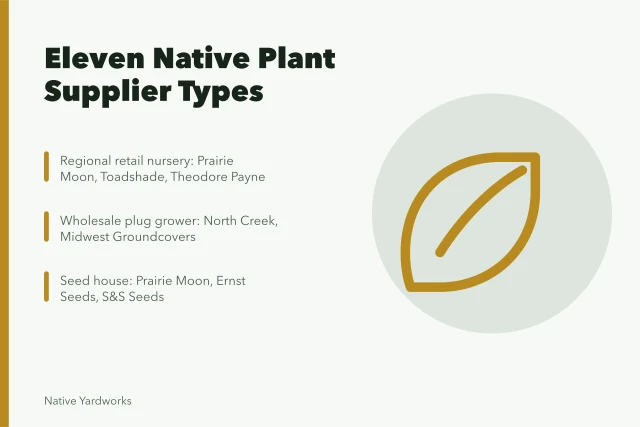
Part of Buyer's checklist for native plant nurseries companies: eleven supplier types
Field guide to native plant nurseries by region: fire seasons interrupt supply
Native plant nurseries by region face fire seasons that interrupt supply, forcing growers to shift shipping schedules and limit what they can sell.
What to take away
This field guide to native plant nurseries by region names real growers and notes how fire seasons interrupt supply. Order by delivery week, not by month.
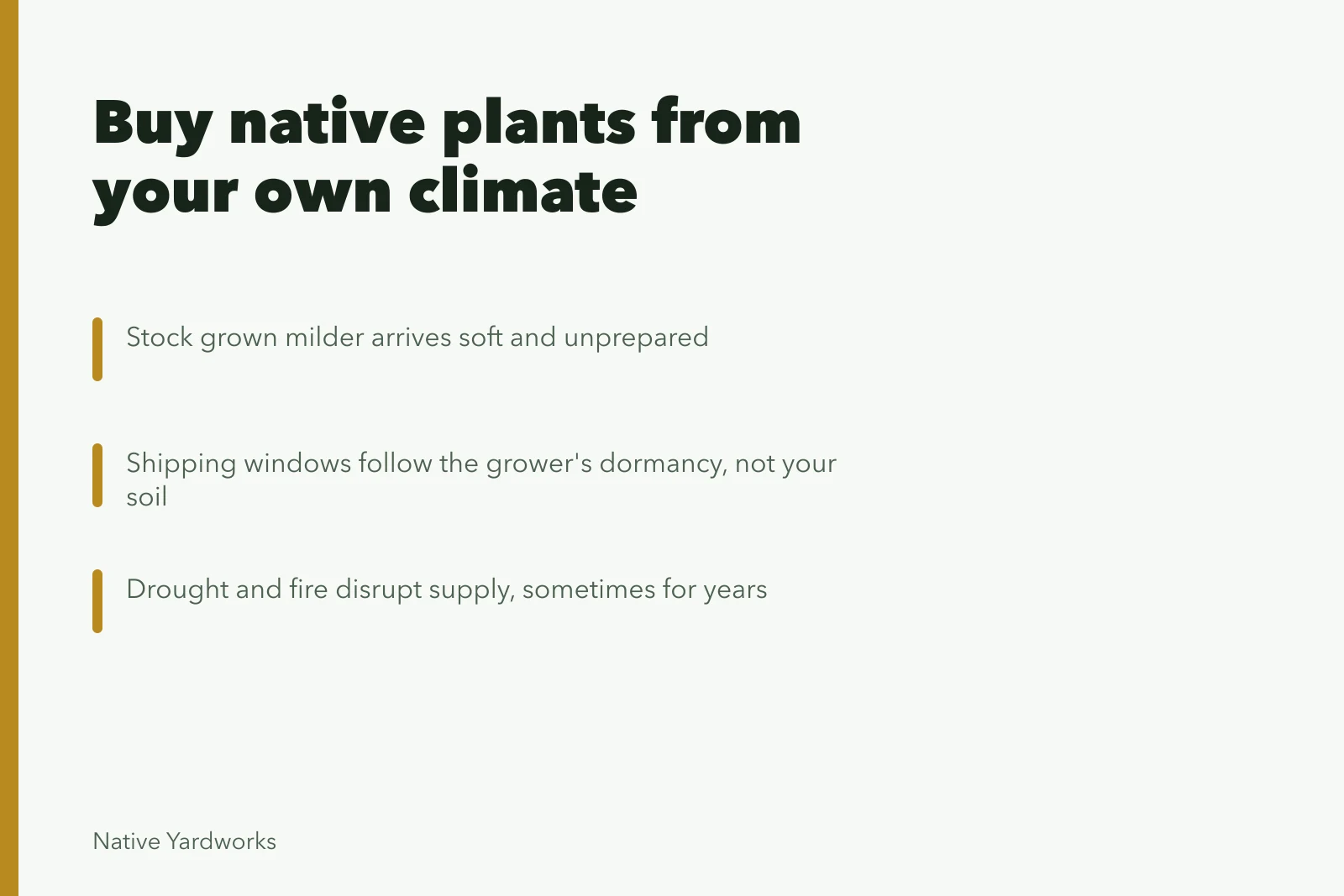
- Stock grown in a milder climate than yours arrives soft and needs water longer.
- Order by delivery week, not by month, and be home for the box.
- After a large fire, restoration orders absorb a region's seed supply.
- Buy the closest grower who actually produces your species, not the closest seller.
- Ask whether the plant was grown outdoors, and at what elevation.
Growing conditions travel with the plant
A plant raised under shade cloth with daily irrigation on the coast has never met your July. It needs more water in year one than the same species raised hard, which is why treating native as needing nothing costs the plant line twice.
Ask two questions: grown outdoors or under cover, and at roughly what elevation. A seller who cannot answer is reselling someone else's stock.
Shipping windows belong to the grower
Mail-order houses ship when their own stock is dormant or rooting, not when your soil is ready. Bare-root plants arrive early in the North and mid-winter in the South. Plant them or heel them in promptly.
A box of dormant plants on a hot porch for a weekend is a total loss. Pots held until the ground is ready are one of the standard ways a project stalls. Have a shaded corner, damp mulch and a bucket of water waiting.
Fire seasons interrupt supply
Wildfire hits wild seed collection and nurseries at once. Severity varies. The Fish and Wildlife Service describes fires burning at different intensities, with topography, dry vegetation and weather setting how large and damaging a fire becomes.
Low-intensity fire thins the forest floor. High-severity fire removes canopy and scorches soil. Mosaic fire mixes both.
For a buyer, availability in a fire-affected region can change within a season. Restoration demand after a large fire absorbs local seed.
Regional fire calendars change what growers can ship. The table gives typical windows and supply effects.
| Region | Typical fire season | How supply breaks |
|---|---|---|
| Pacific Northwest | July to September | Smoke and fire closures can delay seed collection and shift bareroot shipping weeks. |
| California | May to October, and year-round in some areas | Large fires trigger restoration orders that absorb local seed and nursery stock. |
| Southwest | May to June, before the monsoon | Dry lightning fires and post-fire seeding demand shorten seed availability. |
| Southern Plains | Winter to spring | Grassfires and prescribed burns can cut into seed collection windows. |
| Midwest | Spring and fall | Prairie seed collection can be interrupted by drought and smoke, though large fires are less common. |
| Northeast | Spring | Prescribed burns in pitch pine and pine barrens can delay plug orders from regional growers. |
| Southeast | Fall to spring | Longleaf pine restoration after fire can raise demand for local ecotype seed. |
| Mid-Atlantic | Spring | Coastal plain burns and dry springs can tighten supplies of local seed. |
| Rocky Mountains | June to September | High-severity fires remove seed sources and push restoration crews to buy out local stock. |
Water constraints narrow the list
Growers face the same water economics as their neighbors. USDA's Economic Research Service reports that several parts of the High Plains extract far more groundwater than returns each year, producing declining water levels that water-right retirement programs aim to relieve.
Nurseries in constrained areas plan production around that. The result is shorter species lists and earlier order deadlines.
Native plant nurseries by region
| Region | Supplier | What it is |
|---|---|---|
| Pacific Northwest | Native Seed Network (Institute for Applied Ecology), Corvallis, OR | Native seed directory and producer listings; use it to find regional seed growers and track stock. |
| Pacific Northwest | Fourth Corner Nurseries, Bellingham, WA | Wholesale bareroot native stock; sells to restoration projects and trade buyers, not retail. |
| California | Theodore Payne Foundation, Sun Valley, CA | Nursery, seed, retail and wholesale; carries California natives and runs a seed program. |
| California | Tree of Life Nursery, San Juan Capistrano, CA | Retail and wholesale natives; focuses on California flora for gardens and restoration. |
| Southwest | Plants of the Southwest, Albuquerque, NM | Retail seed and plants, arid species; suits high-desert and low-water gardens. |
| Southwest | Borderlands Restoration Network, Patagonia, AZ | Regional seed and restoration supply; tied to borderland habitat projects. |
| Southern Plains | Native American Seed, Junction, TX | Seed for prairie and plains species; mail order and regional mixes. |
| Midwest | Prairie Moon Nursery, Winona, MN | Seed and plugs, mail order; broad prairie and woodland species list. |
| Midwest | Prairie Nursery, Westfield, WI | Seed, plugs and plants; retail and wholesale for Midwest habitats. |
| Northeast | Pinelands Nursery, Columbus, NJ | Wholesale native plugs and containers; serves restoration and conservation contractors. |
| Southeast | Ernst Seeds, Meadville, PA | Wholesale seed and restoration mixes; supplies conservation and reclamation projects. |
| Mid-Atlantic | Izel Native Plants | Online marketplace for native plants from small nurseries; search by species and region. |
| Rocky Mountains | Western Native Seed, Coaldale, CO | Seed for Rocky Mountain and Great Plains species; packet and bulk orders. |
Prices, minimum orders and shipping windows change by season. Confirm current terms with each supplier before ordering.
Typical listed prices as of 2026, before shipping: seed packets $3 to $8, plugs $3 to $7 each, bareroot bundles $1.50 to $4 per plant. Rare species, larger plugs and bareroot shipping drive the higher end. Minimum orders vary by grower.
A buying rule that handles all of this
| Situation | What to do |
|---|---|
| Species available locally and regionally | Buy local, plant in your window |
| Available only from a milder climate | Buy smaller, plant earlier, water longer |
| Available only from a harsher climate | Usually fine, expect slower first-year growth |
| Regional supply disrupted | Substitute the role, not the species |
| Long shipping in summer | Wait for the dormant season |
Cross-check species against the climate criteria for regional plants, and choose the supplier type using the eleven ways to buy.
Common questions
Is a distant grower always worse?
No. A distant specialist in the right species can beat a local generalist selling cultivars. Distance matters less than whether the plant was raised under conditions like yours.
How do I harden off soft stock?
Give it a week outdoors in partial shade before planting, then water attentively through its first month. Soft growth from a mild climate has no tolerance for dry heat yet.
Should I avoid mail order in summer?
For leafed-out plants, generally yes. Dormant-season shipping is far safer, and a delivery week you can meet beats a month you cannot.
What if my region has no native nursery?
Look for a seed house, a native plant society sale, or a conservation district sale before defaulting to a garden center. Those three often carry local genetics a retailer will not.