Reviews
Part of Buyer's checklist for native plant nurseries companies: eleven supplier types
Why does judging seed matter so much for native plant nurseries reviews?
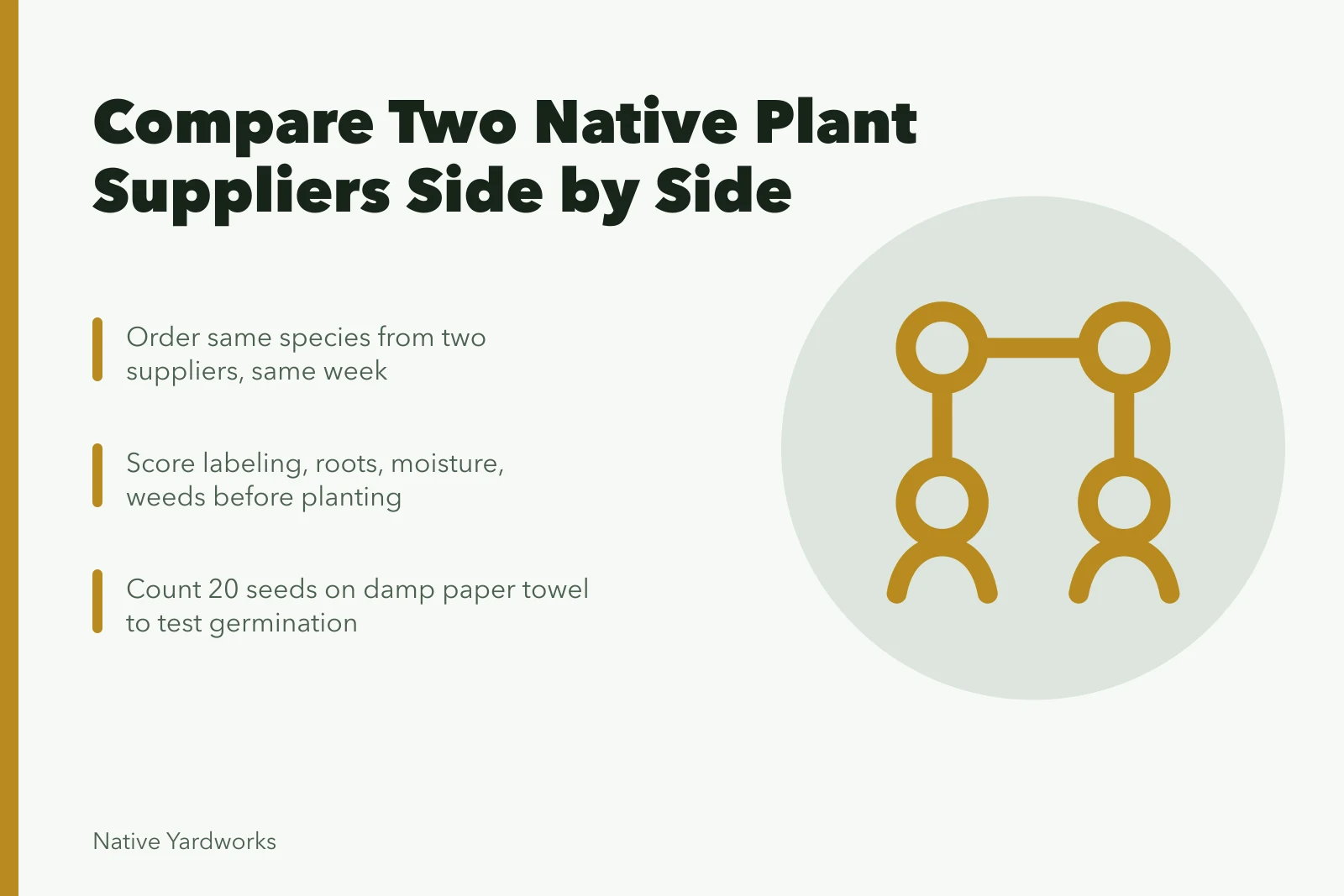
A repeatable way to compare suppliers: order the same species from two, then score identity, root quality, packaging, labeling and first-season survival.
What to take away
- Order the same species from two suppliers and plant them side by side.
- Score what arrives before planting, while returns are still possible.
- Judge seed on its label first, and on germination second.
- One season of comparison settles where you buy for the next decade.
Set up the comparison
Choose two or three species you will need in quantity later. Order a small number of each from two suppliers, timed to arrive in the same week. That is harder than it sounds, because shipping windows belong to the grower's climate rather than yours.
Plant them in the same bed, alternating, at the same spacing, with the same watering. Anything else and you are comparing microclimates rather than suppliers.
Mark which is which in a way that survives. Two adjacent plants of the same species look identical by August, and the whole point of the exercise is knowing which came from where in October. Use permanent tags plus a sketch in your notebook, because tags do go missing and a sketch does not.
Score the delivery before planting
| Check | Good | Poor |
|---|---|---|
| Labeling | Scientific name, origin, straight species noted | Common name only |
| Roots | Pale, branching, reaching the pot edge | Circling, matted, or barely rooted |
| Moisture | Evenly damp | Bone dry or waterlogged |
| Top growth | Proportionate to the pot | Tall and floppy, or heavily cut back |
| Weeds and pests | None visible | Weed seedlings, insects, mold |
| Packaging | Plants upright, soil retained, ventilated | Crushed, tipped, sealed and steaming |
Photograph anything that fails. That is your evidence for a credit, and returns are far easier before planting than after.
Judging seed
Start with the label. USDA publishes guidance on how to choose a good pollinator seed mix.
Ask the questions it exists to answer: which species are in the mix, in what proportions, and are they right for the place you are planting.
Then test germination cheaply. Count 20 seeds onto damp paper towel in a sealed bag, keep it warm, and count what sprouts after the period the species needs. It will not match a laboratory figure but it separates viable seed from a bag of chaff.
Measure the result over one season
Record survival at the end of the first summer and again after the first winter. Note vigor, not just survival: two plants can both be alive with very different futures.
Watch what visits them, too. The Fish and Wildlife Service describes an effort with the Geological Survey to identify bumble bees through a public survey. That shows how usable identification tools have become.
A plant sold as pollinator habitat that nothing visits in two seasons is worth a question. In a small trial bed you can log the visitors alongside the plants and see the difference.
Turn the result into a purchasing rule
- one supplier clearly better: buy there, and say why in your records;
- both acceptable: buy on availability and shipping window;
- both poor: change supplier type, not just supplier;
- results unclear: repeat with a different species before concluding.
Apply the same discipline to seed, plugs and bare-root separately, since a supplier can be excellent at one and weak at another. Growers specialize, and the one with the best plugs in your region is often not the one with the best seed.
Combine this with the nursery services worth paying for and the inspection checks in the stock and seed testing guide.
Common questions
Is a paper towel germination test reliable? Roughly. It is a screen for dead seed, not a laboratory result.
How many plants make a fair test? Five of each species per supplier is enough to see a pattern.
What if a supplier sends the wrong species? Photograph it, contact them before planting, and ask for a credit rather than a replacement mid-season.
Should I test every year? No. Test once, then re-test only if quality visibly drops.