Costs
Does the case for water saving yard products cost hold up once you spend on diagnosis first?
Water saving yard products cost: costing irrigation upgrades honestly, diagnosis first, then parts, installation, commissioning and the recurring costs that vendors.
What to take away
- Spend the first money on diagnosis. It often removes the need for the rest.
- Installation and commissioning usually cost more than the device.
- Payback depends on your water price, which varies enormously by utility.
- Budget for batteries, filters, emitters and one repair per season.
Spend on diagnosis first
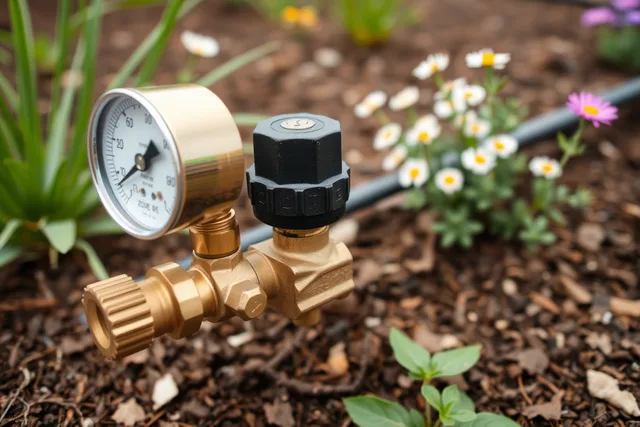
A meter test, a pressure gauge reading and one hour walking each zone cost almost nothing and routinely find the actual problem: a leaking valve, a broken head, or a zone watering a fence.
Fixing those first changes the budget for everything else. Buying a controller before diagnosis is buying a scheduler for a system that is losing water regardless of the schedule.
The full cost of a device
| Cost | Often quoted | Often forgotten |
|---|---|---|
| The device | Yes | |
| Adapters and fittings | Yes | |
| Wiring or valve work | Yes | |
| Installation labor | Sometimes | |
| Commissioning and programming | Almost always | |
| Filters, batteries, emitters | Yes | |
| Repairs and replacements | Yes |
Commissioning is the line that matters most. A controller programmed with default settings and never revisited saves nothing, and the default settings are what you get when nobody is paid to change them.
Work out your own payback
Payback is your water price times the gallons you stop using, and neither number is universal. Get the price per unit from your bill, then estimate savings from a metered before-and-after test rather than a manufacturer figure. Your provider sets that price, and its rules reach into the yard through the utility rather than the building department.
USDA's Economic Research Service reported that agriculture accounts for over 80 percent of the nation's consumptive water use, on the 20 percent of cropland that is irrigated, with most withdrawals in the western states.
Household irrigation is a small share of that total. That is why a household saving has to be measured locally to mean anything.
Check the vintage of any claim
Water data ages, and so do the studies quoted in marketing. USDA's own irrigated agriculture data product carries a note that updates have been discontinued and that it summarizes farms based on a 2013 survey.
Apply that skepticism to product claims: ask what year the test was done, on what system, and in what climate.
Rebates change the arithmetic
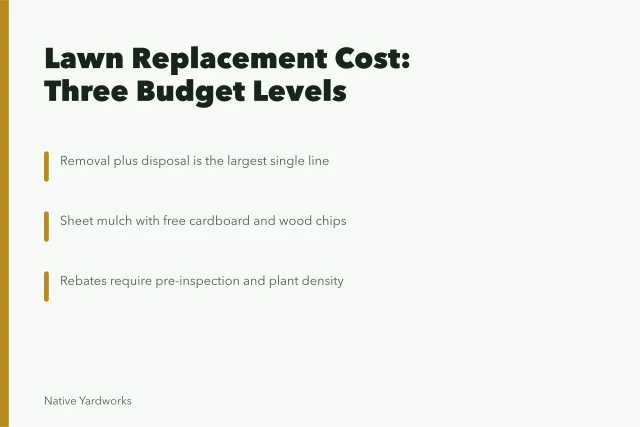
Many utilities rebate weather-based controllers, pressure-regulating heads, drip conversions and turf removal. The turf side has its own conditions, including a pre-inspection before you touch anything and a minimum plant density afterwards. Terms differ, models must usually be on an approved list, and pre-approval is often required.
Call before buying. A rebate that requires a specific model number is easy to miss by one digit.
Ask two further questions while you have someone on the phone: whether the rebate is paid as a check or as a bill credit, and how long processing takes. Both change the cash flow of the project, and a rebate arriving five months later is not money you can spend on the installation.
A sensible spending order
- Meter test and leak repair.
- Pressure gauge, then a regulator if needed.
- Zone corrections so plants with different needs are separated.
- Drip conversion in beds.
- Controller upgrade, with commissioning included.
- Leak monitor, if the property is unattended for long periods.
Set the wider budget with the full project cost breakdown, and choose products using the review framework.