Guides
Native Plants for Erosion Control on Slopes: A US Slope-by-Slope Guide
Match native groundcovers and deep-rooted grasses to your slope grade, plant on contour, and use local rebates and rules to hold soil without endless watering.
What to take away
- Match root type to slope steepnessfibrous roots for gentle grades, taproots and rhizomes for cut banks.
- Plant on contour in staggered rows to slow sheet flow.
- Use compost blankets or coir netting on grades above 3:1 until roots knit.
- Check local rebate and permit rules before you remove turf on a slope.
- Native grasses, sedges, and shrubs hold soil better than mown turf.
Reading the slope before you plant
Walk the slope after a hard rain. Note where water sheets, where it channels, and where soil already slumps. Those spots need different plants.
Measure the grade in percent. A 15 percent slope is gentle. A 33 percent slope is 3:1. A 50 percent slope needs structural help, not just plants.
Test drainage with a shovel and a bucket. Dig a hole one foot deep, fill it with water, and time how fast it drains. Slow drainage changes your species list.
Check sun, wind, and salt exposure. South and west faces dry fast. Coastal sites add salt spray, a problem covered in our guide to Miami salt-tolerant plants for coastal yards.
Native groundcovers by slope zone
| Slope zone | Grade | Native groundcovers and grasses | Root habit |
|---|---|---|---|
| Crest | 0 to 10 percent | Pennsylvania sedge, wild strawberry | Fibrous, shallow |
| Mid slope | 10 to 30 percent | Little bluestem, sideoats grama, bearberry | Fibrous, deep |
| Cut bank | 30 to 50 percent | Switchgrass, prairie dropseed, sumac | Rhizomatous, deep |
| Toe | Any grade | Blue flag iris, soft rush, buttonbush | Wet tolerant |
These are examples, not a national list. Your state extension office and NRCS plant guides give local cultivars and seeding rates.
Slope stabilization with native plants: geometry and depth
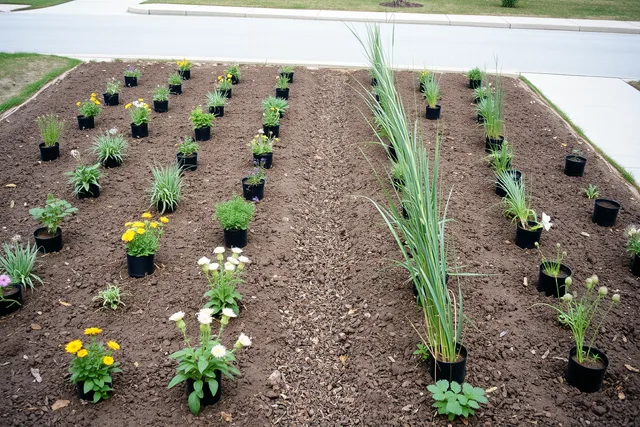
- Stake a contour line every four to six feet up the slope.
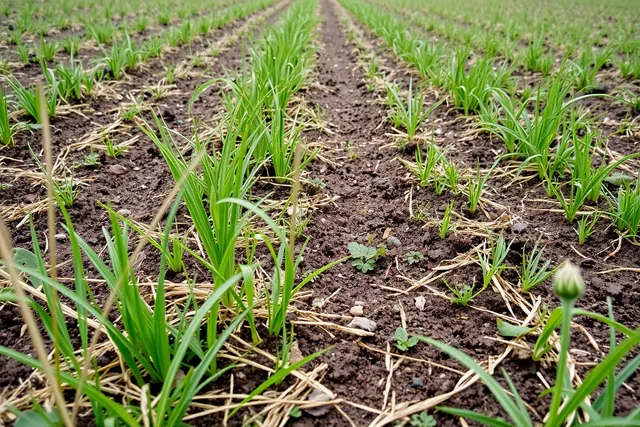
- Plant plugs or bare roots in staggered rows along those lines.
- Set plugs slightly deeper than nursery depth to protect the crown.
- Mulch with coarse wood chips or hydromulch, never fine sawdust.
- Water deeply twice a week for the first season, then taper.
Root depth matters more than top growth. Switchgrass roots can reach eight feet in deep soil. That network binds soil particles between rainstorms.
On grades steeper than 3:1, add a compost blanket or coir netting. The netting holds soil until roots spread. Without it, a single cloudburst can move your plugs downhill.
Riparian buffer native planting along the toe
A stream or ditch at the bottom of a slope needs a buffer, not a mown edge. Plant three bands: wet-tolerant sedges at the water line, shrubs behind them, and deep-rooted trees above.
Buffers slow floodwater and trap sediment. They also shade the water, which lowers temperature stress on fish. Keep the buffer at least 15 feet wide on each side where local rules allow.
Check your state riparian rules before you clear or plant. Some states require a permit for work within a certain distance of a mapped stream.
Hillside planting on a budget
- Start with plugs, not gallon pots. Plugs cost less and establish faster on slopes.
- Buy seed mixes from a local conservation district, which often sells native mixes at cost.
- Trade labor with neighborsone person digs, one plants, one waters.
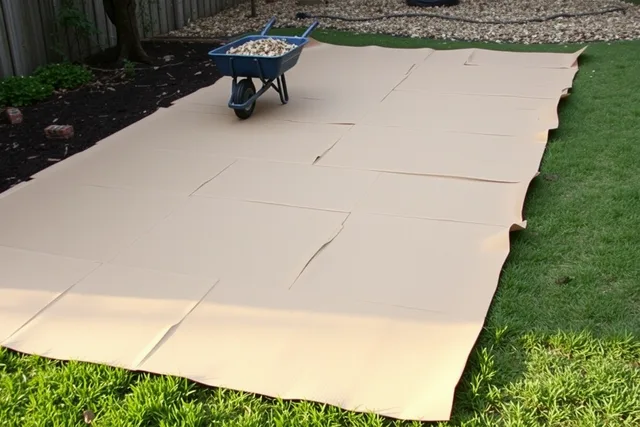
- Use cardboard and wood chips to smother turf instead of renting a sod cutter.
- Time planting to fall rains so you water less.
Example: A Midwest clay slope
A 25 percent clay slope in central Illinois failed after a July storm. The owner removed turf in a two-foot band on contour, planted 400 little bluestem and sideoats grama plugs, and covered the bare soil with a compost blanket. By the next spring, roots held the surface and the rills stopped. Cost stayed under $600 because plugs came from a county soil and water district sale.
Regional programs and watering rules
Watering rules change by state and by water district. The EPA WaterSense label covers irrigation controllers and sprinkler bodies, not whole yards. That distinction matters when you plan a slope that needs establishment water. Read the EPA WaterSense program explainer before you buy a controller.
Rebate programs for turf removal often exclude slopes, so call first. The Wikipedia page on lawn replacement and water conservation includes rebate context that helps you ask better questions.
Fire risk matters on dry slopes near wildlands. The NFPA Firewise USA program lists spacing and plant choices for fire-resistant yards. That guidance shapes what you plant within 30 feet of a structure.
For deer pressure, the New York DEC deer-resistant native plants list gives species that browse less. Use it as a starting filter, not a guarantee.