Guides
Native Plants for Erosion Control on Steep Slopes: What to Plant and Why
Native Plants for Erosion Control on Steep Slopes: What to Plant and Why. Learn slope mechanics, root strength, planting geometry, and native species for banks over
Native Plants for Erosion Control on Steep Slopes: What to Plant and Why
What to take away
- On slopes over 25 percent, water gains speed and scours bare soil. Native plants for erosion control steep slopes must slow flow first, then root deeply.
- Match fibrous, deep-rooted grasses and spreading groundcovers to the gradient. Plant on contour, not in straight up-and-down rows.
- Use NRCS conservation planting guidance and local rebate programs to choose species and cut watering.
- Expect deer pressure on new growth. Check state lists such as New York DEC for deer-resistant native plants.
- For the per-slope breakdown by grade, read the US slope-by-slope guide.
Steep Slope Mechanics: Water Speed and Root Strength
On a 25 percent grade, water runs faster than on a lawn. Faster water detaches soil particles and cuts rills. Rills become gullies. A native planting must interrupt that flow. Roots hold soil in two ways. Fibrous roots bind surface soil. Taproots and deep grass roots anchor lower layers. Root tensile strength varies by species. Native grasses and sedges often excel on wet, steep banks. Slope shape matters. Concave slopes collect water. Convex slopes shed water. A steep bank below a driveway or roof needs a level spreader or diversion before plants can work. See NRCS technical resources for conservation planting layouts.
Native Plant Traits for Gradients Over 25 Percent
Look for plants with these traits:
- Deep, fibrous root systems that knit soil.
- Spreading stems that root at nodes.
- Tolerance of dry spells after establishment.
- Ability to survive mowing or cutting if needed.
- Regional origin, so they match local rain and cold.
| Plant group | Root habit | Best steep-slope role | Notes |
|---|---|---|---|
| Warm-season grasses | Deep fibrous | Armor surface, slow runoff | Use plugs on contour |
| Sedges and rushes | Dense fibrous | Hold wet seeps | Tolerate wet feet |
| Spreading groundcovers | Rooting stems | Cover bare gaps | Avoid invasive look-alikes |
| Shrubs | Woody roots | Anchor toe of slope | Check mature size |
| Trees | Buttress roots | Stabilize lower bank | Not for mid-slope |
This table is qualitative. For local species, check state native plant lists. In the Midwest, USDA ARS research on native grasses can guide selections. But region matters. A plant that works in Texas may fail in Minnesota. The practical detail is set out in Native Plants for Erosion Control on.
Planting Geometry on Contour
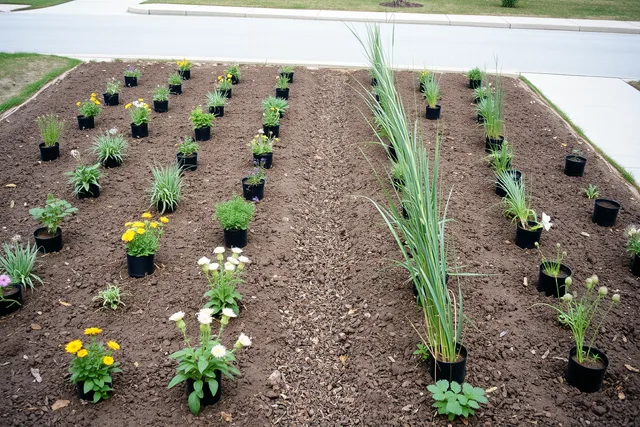
Planting geometry controls success on steep ground. Rows that run straight downhill channel water. Rows on contour create small dams. On a 30 percent slope, a 6 inch trench on contour can slow runoff and hold plugs. Follow these steps:
- Mark contour lines with a level or laser.
- Dig a shallow trench along each line, about 4 to 6 inches deep.
- Set plugs or bare roots in the trench, spaced by mature width.
- Backfill and firm soil, leaving a slight basin.
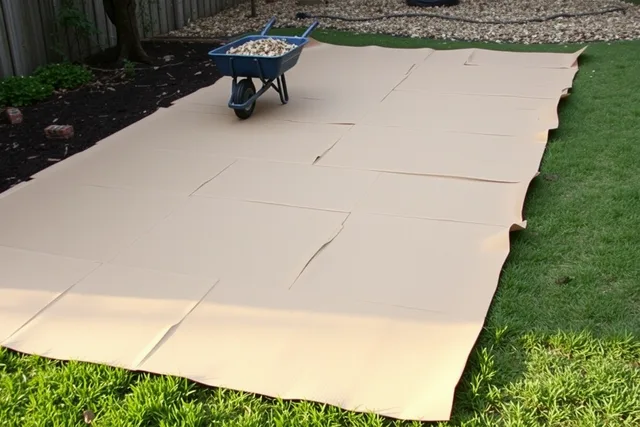
- Mulch with coarse wood chips or straw, not fine sawdust.
- Water deeply once, then taper as roots establish.
Checklist before you dig:
- Confirm the slope grade with a level.
- Call 811 before any digging.
- Check for septic lines, irrigation, and buried utilities.
- Identify erosion typesheet, rill, or gully.
- Choose species for sun, shade, and soil moisture.
- Plan safe access for tools and water.
On steep ground, the first job is to slow water. The second job is to root soil. Plants do both when placed on contour.
Example: A 30 Percent Bank in the Midwest
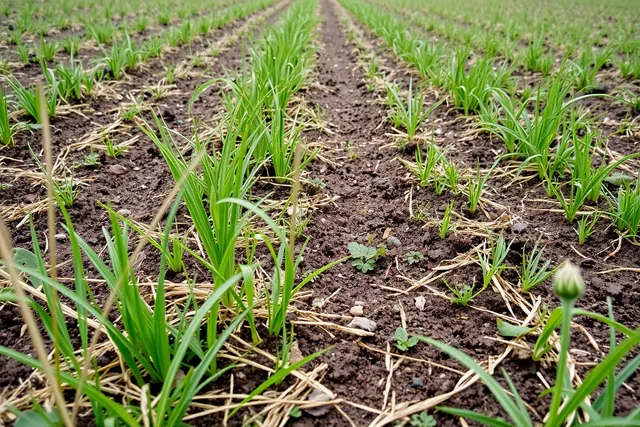
A homeowner in Iowa had a 30 percent bank below a gravel driveway. Rain cut a new rill each spring. The fix started with a shallow diversion at the top. Then the owner planted warm-season grass plugs and sedge on contour. The grass roots held the surface. The sedge handled a wet seep. Wood chip mulch covered bare soil between plugs. After two growing seasons, the rill stopped growing. The owner still had to water during a dry first summer. This approach uses native plants for hillside erosion, not just any groundcover. Local conservation districts often rent no-till drills or offer plant sales. NRCS field offices can review a conservation plan.
Watering, Rules, and Deer Pressure
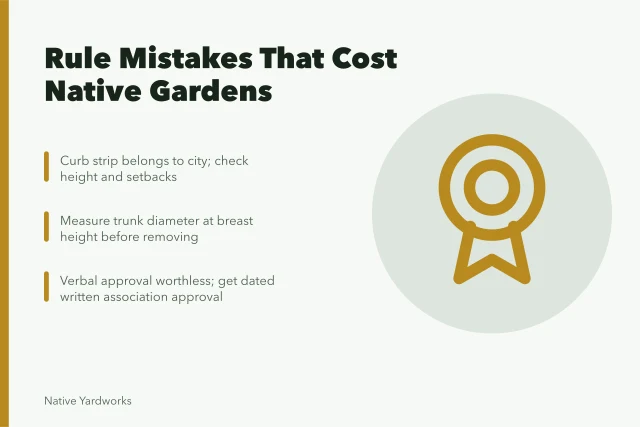
New native plantings need water until roots reach deeper soil. EPA WaterSense outdoor tips explain efficient watering and rebate programs. Rebates may cover rain sensors or native plant replacements. Homeowner association rules can limit plant height or require mowed strips. Read covenants before planting. Some states and cities offer stormwater credits for native plantings. Check local watershed programs. Deer can strip new growth. New York DEC lists deer-resistant native plants. Use fencing for the first few years, then rely on resistant species.