Guides
Salt-Tolerant Native Plants for Atlantic Coastal Yards: A Regional Guide
Salt-tolerant native plants for Atlantic and Gulf coastal yards: regional picks, siting steps, and watering rules for each coast and its weather.
What to take away
- Salt spray and soil salt are separate problems, and only a handful of natives tolerate both. Match the plant to the exposure you actually have.
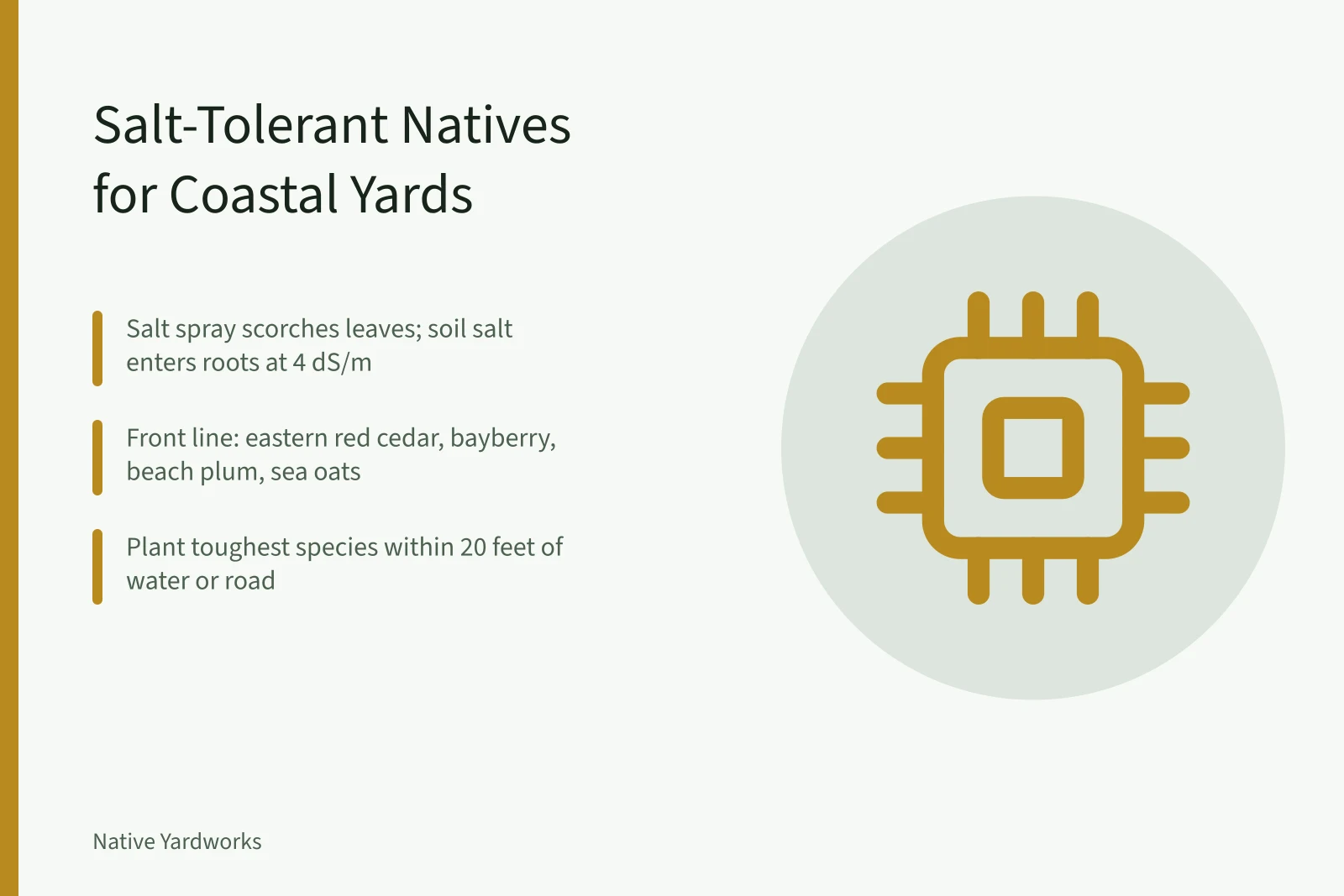
- Front-line species with proven coastal tolerance include eastern red cedar, bayberry, beach plum, sea oats, bitter panicum, and muhly grass.
- Soil is classified as saline once saturated-paste electrical conductivity passes about 4 dS/m, a level surge flooding and road salt can push a yard toward.
- WaterSense labels irrigation controllers and spray sprinkler bodies. The label does not certify whole yards or plant lists.
- South Florida needs its own species list because of hurricane wind and year-round warmth.
Why Salt Spray and Soil Salt Are Different Problems
Coastal storms push salt aerosol inland on wind. Leaves scorch, buds die, and the windward edge of a yard browns first. Wind-driven spray is one of the forces described in the Wikipedia overview of coastal erosion.
Soil salt works differently. It enters through roots and stays in the root zone. Saturated-paste electrical conductivity above roughly 4 dS/m marks soil as saline. Storm surge can leave a bed at that level for a season.
Leaching with clean water is the main fix. Gypsum helps sodic clay soils, not every salt problem. Extension soil labs measure conductivity, and the test costs less than replacing a shrub.
Road salt adds a second source. The Wikipedia entry on road salt describes how sodium and chloride build up in soil and which species tolerate the load.
Matching Plants to Coastal Regions
No single species list fits the whole coast. Latitude, winter cold, and dune regulations change what works.
| Coastal region | Dependable native choices | Siting note |
|---|---|---|
| New England and Maritime Canada | American beachgrass, seaside goldenrod, bayberry, beach plum | Dense planting holds sand; skip fertilizer near the shore |
| Mid-Atlantic, New York to Virginia | Eastern red cedar, northern bayberry, little bluestem, switchgrass | Cedar and bayberry shelter tender plants from wind |
| Southeast, Carolinas to Georgia | Sea oats, southern wax myrtle, yaupon holly, live oak, muhly grass | Sea oats are protected in several states; buy nursery stock |
| Gulf Coast, Panhandle to Texas | Bitter panicum, dune sunflower, railroad vine, black mangrove | Mangroves freeze back north of their natural range |
| South Florida | Sea grape, cocoplum, gumbo limbo, sabal palm | Salt spray plus hurricane wind, best handled locally |
Buy nursery-propagated stock from a grower in your own region. Local ecotypes handle local wind and cold better than plants shipped from another coast.
South Florida sits at the far end of that range. Sea grape, cocoplum, and sabal palm handle salt spray and hurricane wind. Miami native plants for salt tolerance gathers the local extension guidance in one place.
Siting Steps for a Salt-Exposed Yard
Work in this order and you avoid two common failures: the right plant in the wrong zone, and the wrong irrigation schedule.
- Walk the yard after a storm and note which side browns first. That edge is your windward exposure.
- Test soil electrical conductivity through your state extension lab before you buy anything.
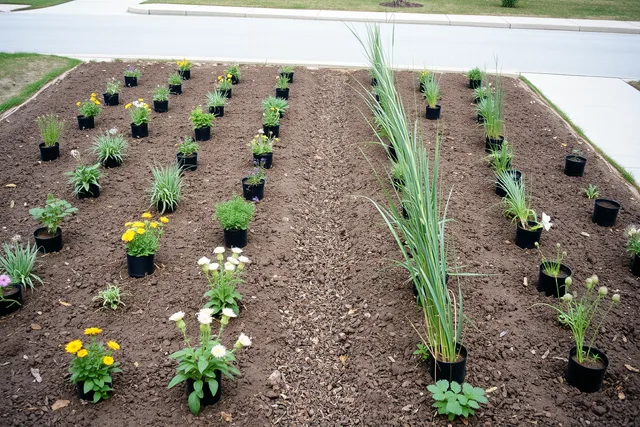
- Plant the toughest species in the first 20 feet from the water or the road.
- Set a windbreak of cedar or wax myrtle, then place tender perennials behind it.
- Group plants by water need so one drip zone does not drown the rest.
Example: A Barrier Island Yard in New Jersey
A bayfront lot with winter wind off the water usually fails with hybrid tea roses and boxwood. Replace them with bayberry, beach plum, and little bluestem in the front row.
Keep blueberries, ferns, and other tender plants behind a cedar hedge. Deer browsing is heavy on Cape Cod and Long Island, and the New York DEC deer-resistant native plant list is a practical starting point.
Salt injury is one-sided. If the damage follows the prevailing wind, treat it as spray burn. If the whole plant stalls, test the soil.
Watering Rules, Rebates, and Well Water
The WaterSense program rules explain what the label proves and where your water district takes over. Controllers and sprinkler bodies carry the label, not yards or plant palettes.
Many coastal water districts limit irrigation days or seasons. Replacing a strip of lawn with beach plum and switchgrass cuts demand, and several districts pay rebates for the change.
Where yards draw from shallow wells, overwatering can pull saltwater into the supply. Check with your water district before you expand an irrigation zone.