Guides
Front yard planting checklist: 8 steps before you buy
Before you shop for front yard plant combinations, work this checklist of eight steps: draw the site, find the right-of-way, dig the soil, test one bed.
What to take away
- Measure and draw before you shop. Everything downstream depends on the drawing.
- Find the property line and the public right-of-way; they are not the same.
- Dig one hole and look at the soil before trusting any map.
- Group plants by water need and start from species native to your region.
- Run a small test bed for one season and let it correct your plan.
Step one: draw the front yard to scale
Graph paper is enough. Front yard plant combinations start with a drawing like this, not with a plant list. Mark the house wall, the walk, the driveway, the sidewalk, the curb, the meter, the hose bib, the downspouts and every tree trunk. Then add the things that constrain planting: the sight triangle at the driveway, the utility easement, the mail carrier's path, the snow pile, the afternoon shade, and the low spots where water stands. Shade and where water sits are what decide the water-wise half of the plan.
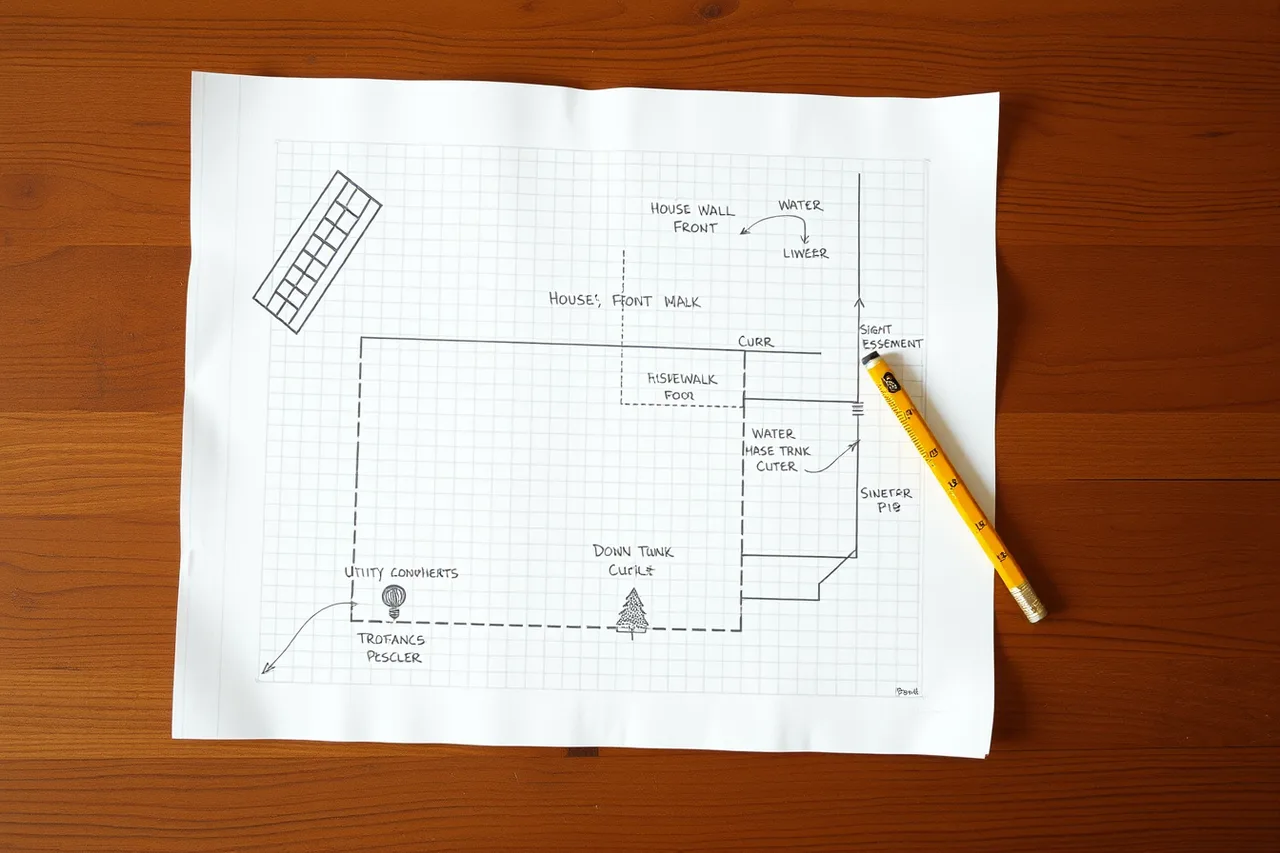
You now have a bed shape that fits reality instead of a photo.
Step two: separate your yard from the right-of-way
The strip between sidewalk and curb usually belongs to the city, and the rules there are different from the rules ten feet away. Confirm the boundary before you plan anything tall, woody or permanent in it.
The line is often further into the yard than owners assume, sometimes several feet behind the sidewalk. That matters because the city keeps the right to dig in its own strip for a water main or a sidewalk repair, and it will not replant what it removes.
Treat the right-of-way as borrowed ground: plant it with inexpensive, easily replaced material and keep the investment on your side of the line. Plugs, seed and divisions are easier to replace than mature stock, and regionally native grasses and perennials generally need less supplemental water once they are established than a conventional lawn does.
Step three: look at the soil yourself
Dig a hole a foot deep in the bed area. Note where the topsoil stops, whether roots turn sideways at a compacted layer, and how fast water drains out of the hole. If you want pH and nutrient readings before you pick species, your land-grant university's Cooperative Extension Service runs soil tests.
USDA's short explanation of what soil is frames the functions that matter here: sustaining plant life, regulating water flow, filtering pollutants, cycling nutrients and providing physical stability. A hole tells you which of those your yard is currently doing badly.
Step four: assign roles before species
Write the four jobs on your drawing: structure, matrix, seasonal accent, ground layer. Assign an area to each, and write down how much water each area will get; grouping thirsty plants together and away from dry ones is the cheapest water-wise move in the whole plan. Only then start looking for regional species that fit.
Start from plants native to your own region. Purple coneflower (Echinacea purpurea), black-eyed Susan (Rudbeckia hirta), butterfly weed (Asclepias tuberosa), little bluestem (Schizachyrium scoparium) and switchgrass (Panicum virgatum) are common starting points across much of the eastern and central United States, but nativity is regional: a prairie plant is not a desert plant. Confirm what is native where you live through the USDA PLANTS Database or your state native plant society before you order.
This order prevents the most common front-yard failure, which is a collection of individually appealing plants that never becomes a planting.
Step five: build the list like a collection record
For each plant, record scientific name, common name, native range, water need, source and where it will go. That is how public collections track plants: the U.S. Botanic Garden documents and tags every acquisition with scientific and common names, description, native range, original source and physical location, across more than 9,500 accessions.
Your version is a spreadsheet. It is the difference between reordering what worked and guessing next spring.
Step six: check the rules in writing
Read the vegetation ordinance, the right-of-way plant standard and the covenants. They live in three places: the municipal or county code published by your city or county, the recorded plat and any deed restrictions on file with your county recorder, and any homeowners association covenants attached to your deed. For anything in the right-of-way, ask the public works department whether a right-of-way or encroachment permit is required; for the yard itself, the planning or code enforcement office confirms which rules apply to your address. Submit the plan where required and keep the dated approval. Details are in the local codes guide.
Step seven: test one small bed
Plant the smallest version of your planting plan, one season ahead of the full job. That is the phased route in miniature, and phasing buys information at the price of one more delivery. Run the test bed the way you mean to run the whole yard: drip or hand water deeply and rarely instead of lightly and often, mulch it, and drop any plant that sulks under a water-wise schedule. You will learn:
- how much watering the first summer takes;
- which species emerge late and look dead in April;
- whether your edge treatment survives the mower;
- how the bed reads from the sidewalk at dusk.
Step eight: order early
Write the final list from the test bed results, then order months ahead. Order from a nursery that grows plants from regional seed; state native plant society sales and specialty native nurseries are the usual source, and popular straight species sell out first. Once the drawing, the roles and the rules are settled, combination choices are the next step.