Reviews
US Homeowners: Four Native Front-Yard Choices
US homeowners weigh four native front-yard choices: formal or naturalistic design, plugs or larger stock, straight species or cultivars, and phased planting.
What to take away
For US homeowners, these four native front-yard choices shape the design:
- Formal layouts survive scrutiny from the street; naturalistic ones need a hard edge to do the same.
- Plugs cost less and establish well, but leave you looking at mulch for a year.
- Straight species carry conservation value that a named cultivar may not.
- Phasing costs more in total and far less in wasted plants.
Formal against naturalistic
A formal layout uses repetition, symmetry and clipped or naturally tidy forms. A naturalistic one uses a mixed matrix that shifts through the season. Both can be entirely native.
Formal vs Naturalistic Native Yards
Formal
- Reads as intentional
- Immediately
- Weeding
- Easy to spot intruders
- Seasonal change
- Modest
- Neighbor complaints
- Rare
- Habitat value
- Depends on species
Naturalistic
- Reads as intentional
- Only with defined edge
- Weeding
- Needs plant ID skills
- Seasonal change
- Large, dormant look
- Neighbor complaints
- More likely first two winters
- Habitat value
- Usually higher, more layers
Formal
- Reads as intentional
- Immediately
- Weeding
- Easy to spot intruders
- Seasonal change
- Modest
- Neighbor complaints
- Rare
- Habitat value
- Depends on species
Naturalistic
- Reads as intentional
- Only with a defined edge
- Weeding
- Needs plant identification skills
- Seasonal change
- Large, including a dormant look
- Neighbor complaints
- More likely in the first two winters
- Habitat value
- Usually higher, more layers
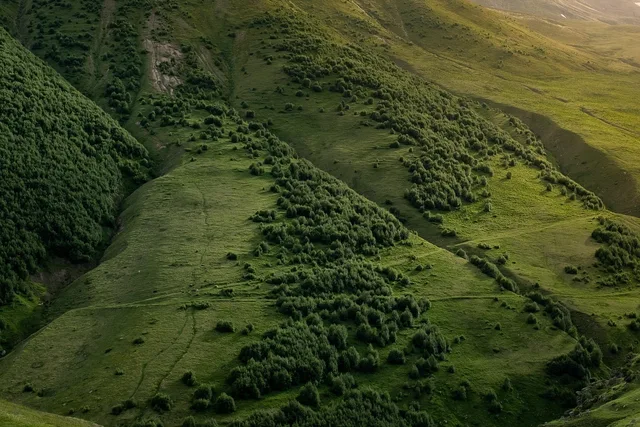
The regional argument favors the naturalistic end. The Bureau of Land Management, which manages 245 million acres, describes native plant communities as what defines recognizable American country, from sagebrush steppe to desert to alpine forest and prairie. A front yard borrowing that structure will look like where it is.
Plugs against larger stock
Plugs and quarts are cheaper, transplant with less shock, and root out fast for grasses and most perennials. Gallons and larger give instant presence and cost several times more per plant.
A practical split: plugs for the matrix and the ground layer, one or two larger plants for structure where the eye lands. That gets the bed to look composed in year one without paying gallon prices for 80 plants.
Stock size also changes the watering job. A plug has almost no root reserve and dries out within a day in hot weather. It needs light, frequent water for its first weeks.
A gallon plant holds moisture longer. Its dense root ball can stay wet while the surrounding soil dries. Owners who water the bed and not the plant kill gallon stock.
Either way the test is a trowel pushed to root depth before you turn on the hose. Neither is harder overall; they fail differently, and you should know which failure you are watching for.
Straight species against cultivars
A cultivar is a selection, propagated to be uniform. Some are selections of native species and behave much like them. Others have altered flower shape, doubled petals or foliage color, and may offer less to pollinators.
There is a conservation dimension too. The U.S. Botanic Garden notes in its plant conservation work that about three out of every ten plant species in the United States are threatened. Buying straight species from regional growers keeps demand pointed at the genuine article, which is material gathered by hand in the field, then cleaned, tested and stored.
Where uniformity genuinely matters, such as a paired entry planting, a cultivar is a reasonable choice. Make it a decision, not a default.
All at once against phased
Doing the whole front yard in one season gives a coherent result and one disruption. It also multiplies every mistake by the full area and creates more bare ground than you can weed.
Phasing costs more in total, because mobilization and delivery repeat. It buys information: which corner floods, which species sulks, how many hours the weeding really takes. For a first native project, phase it.
The exception is a project where heavy equipment comes once, for grading, drainage or hardscape. A machine brought back for phase two costs more than doing all the earthwork at the start.
Do the site work across the whole area in one visit, then plant in phases over two or three seasons. Mulch or a temporary cover holds the unplanted ground meanwhile. Phasing that way also moves the biggest invoices out of the same few weeks.
Once you have picked a direction, price it against the budget breakdown and match it to one of the twelve front-yard recipes.