Reviews
Getting water-saving yard products right the first time
Water-saving yard products: weather-based against soil-based controllers, drip against spray, and manual against automatic, which choice actually reduces the number.
What to take away
- Weather-based control suits mixed yards; soil-based control suits distinct zones.
- Drip suits beds, spray suits turf, and mixing them on one zone suits nobody.
- Manual watering with a timer beats a badly programmed automatic system.
- Soil texture decides run times more than any product setting does.
Weather-based against soil-moisture-based control
A weather-based controller adjusts run times using local weather data. A soil-moisture-based controller waters when a buried sensor reports dryness.
Weather vs Soil-Moisture Controllers
Weather-based
- Best for
- Several zones, mixed planting
- Main failure
- Wrong local data or zone settings
- Setup effort
- Zone details, soil, slope, plant type
- Ongoing checks
- Seasonal review
Soil-moisture-based
- Best for
- One or two well-defined zones
- Main failure
- Sensor in unrepresentative spot
- Setup effort
- Careful placement and calibration
- Ongoing checks
- Sensor verification against a trowel
Weather-based
- Best for
- Several zones, mixed planting
- Main failure
- Wrong local data or wrong zone settings
- Setup effort
- Zone details, soil, slope, plant type
- Ongoing checks
- Seasonal review
Soil-moisture-based
- Best for
- One or two well-defined zones
- Main failure
- Sensor placed in an unrepresentative spot
- Setup effort
- Careful placement and calibration
- Ongoing checks
- Sensor verification against a trowel
Both work when commissioned properly. Both waste water when installed and forgotten, so somebody has to come back and adjust the schedule after the weather changes.
The deciding question is how uniform your yard is. One bed on one soil with one plant type suits a sensor. A property with sun and shade, turf and beds, flat ground and slope is easier from weather data plus careful zone settings.
Drip against spray
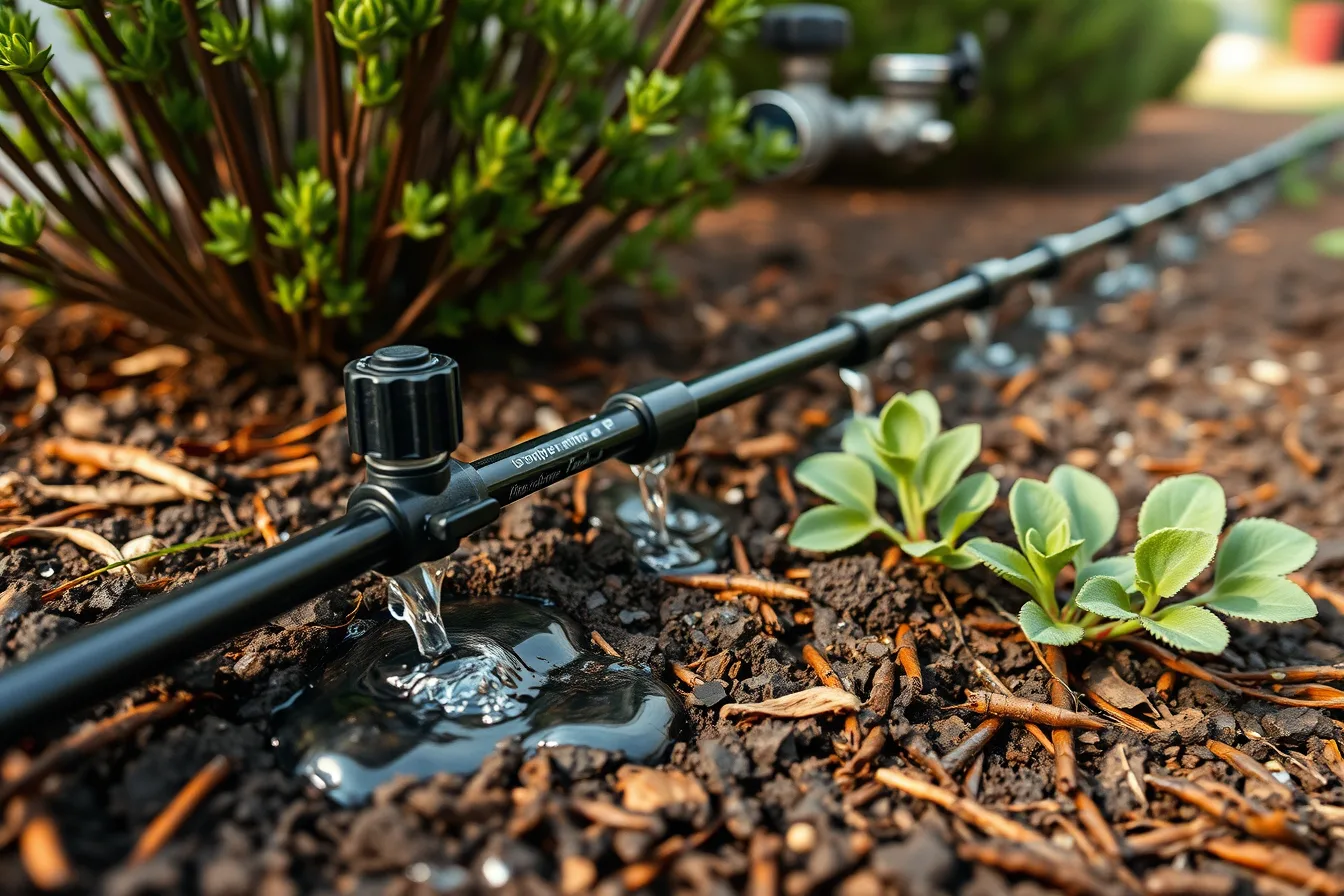
Drip delivers water at the root zone with little loss to wind and evaporation, and it suits beds, shrubs and trees. Spray and rotary heads suit turf, where uniform coverage over an area is the point.
Converting Spray Zone to Drip
- Add pressure regulator and filter at valve
- Cap old heads or replace with risers
- Feed tubing from risers
- Set new longer, lower-rate run time
The mistake is running both on one valve. Their application rates are not comparable, so one is always wrong.
Converting a spray zone to drip is a common project, but it means more than swapping heads. Add a pressure regulator and filter at the valve. Cap old heads or replace them with risers feeding tubing.
Drip needs a new run time because it runs far longer at a much lower rate. Leaving the old schedule in place can drown a bed you just replanted.
Soil texture sets the run time
How long you can water before runoff begins depends on the soil, not the device. Sand takes water quickly and holds little; clay takes it slowly and holds a lot, which is why clay soils need cycle-and-soak run times. Texture also governs how a moisture meter behaves, so learn yours before trusting any reading.
Soils vary that much because they are genuinely different materials. USDA classifies them into twelve soil orders, published with descriptions and distribution maps across the United States. Your run times come from your soil, not from a default program.
Manual against automatic
Automatic systems are consistent and easy to ignore. Manual watering is attentive and easy to skip. The best household result usually comes from a hybrid: automatic for turf, hand or hose-timer watering for establishing beds.
Measurement is what settles this argument. USDA's overview of understanding irrigated agriculture rests on a Farm and Ranch Irrigation Survey conducted every five years precisely because acreage and application rates have to be measured rather than assumed. The household version is your meter, read monthly.
Where the money actually goes furthest
- pressure regulation, which improves every other component;
- fixing leaks, which no controller can compensate for;
- separating zones so plants with different needs are watered differently;
- converting beds to drip;
- upgrading the controller last.
Price these against the water equipment budget method and confirm the buying criteria in the review framework.