Reviews
Part of Native Yard Projects Planning: A Process Overview
Native yard tools compared: what earns a spot in the shed
Native yard tools compared by name, from AMS soil probes to Fiskars edgers, with what each tool does and which ones earn a spot in the shed.
What to take away
- A $12 AMS soil probe and a $9 hand trowel settle most watering questions before any electronic meter does.
- Cheap, boring tools that survive a winter beat clever tools that do one thing.
- Engraved metal labels outlast every marker and marker pen on the market.
- Coarse arborist wood chips beat dyed bagged mulch on slope, water movement and cost.
- Skip weed fabric under planting beds and fertilizer spikes on unamended native soil.
Soil probes and moisture meters
AMS makes a 36-inch chrome-plated soil probe, sold through forestry and soil-testing suppliers, that pulls a core and doubles as a moisture check by feel.
The Sonkir MS02 is a $15 to $20 analog probe sold on Amazon; the Blumat Digital moisture meter, about $60, is the one growers in containers and raised beds trust.
A long screwdriver and a hand trowel are the reference instruments. Everything else has to beat them.
Learn your soil texture before buying an electronic meter, because texture governs how a reading behaves. USDA's soil texture calculator turns sand, silt and clay percentages into a texture class, and a lab or extension test gives those percentages.
In clay, a meter reading of "moist" can still mean unavailable water. In sand, "dry" arrives long before the plant is stressed.
Test protocol: take the meter reading, then dig beside it and look. Do that ten times across the season. If the meter and the shovel disagree more than twice, the meter is decoration.
Watering controls
Timers and controls pay off only if they cut water application, not if they automate it. The difference shows at national scale.
USDA's Economic Research Service reports in its review of irrigation trends that US irrigated acreage grew from under 3 million acres in 1890 to over 58 million in 2017. Average water applied per irrigated acre fell.
Three controllers are worth comparing by name. Rachio's 3 and 4 models, $150 to $250, adjust schedule from local weather data. Hunter's Pro-HC, about $200, is the contractor-grade pick with a wired flow meter option. Orbit's B-hyve XR, about $100, is the budget entry and the one most rebate programs list.
Record water use for one month on manual watering, then one month on the controller, in comparable weather. If the number does not fall, the device is a convenience purchase.
Labels, edging and mulch
Named pick
- Plant labels
- Kincaid engraved aluminum, about $2 each
- Edging
- Fiskars 28-inch steel edger, about $30
- Mulch
- Local arborist chips, often free
- Weeding tools
- CobraHead Original weeder, about $30
What to test
- Plant labels
- Legibility after one winter
- Edging
- Frost heave, mower contact
- Mulch
- Depth held, weed suppression
- Weeding tools
- Root removal, wrist strain
Failure sign
- Plant labels
- Faded ink by March
- Edging
- Lifted sections, wavy line
- Mulch
- Bare soil by midsummer
- Weeding tools
- Snapped taproots, blistered hands
Labels deserve the most attention. Write the scientific name with a garden-grade marker or an engraved tag, and keep a mapped list as backup, because every label eventually goes missing. You will want both in the second April, when almost nothing in the bed is identifiable without one.
What not to buy
Skip weed fabric under planting beds. It blocks the self-seeding that fills a native bed and degrades into shreds you will pick out for years. It is one of the savings that turn out not to be savings on a tight budget.
Skip fertilizer spikes for regional natives on unamended soil. Skip anything sold as a one-step solution to a problem you have not measured.
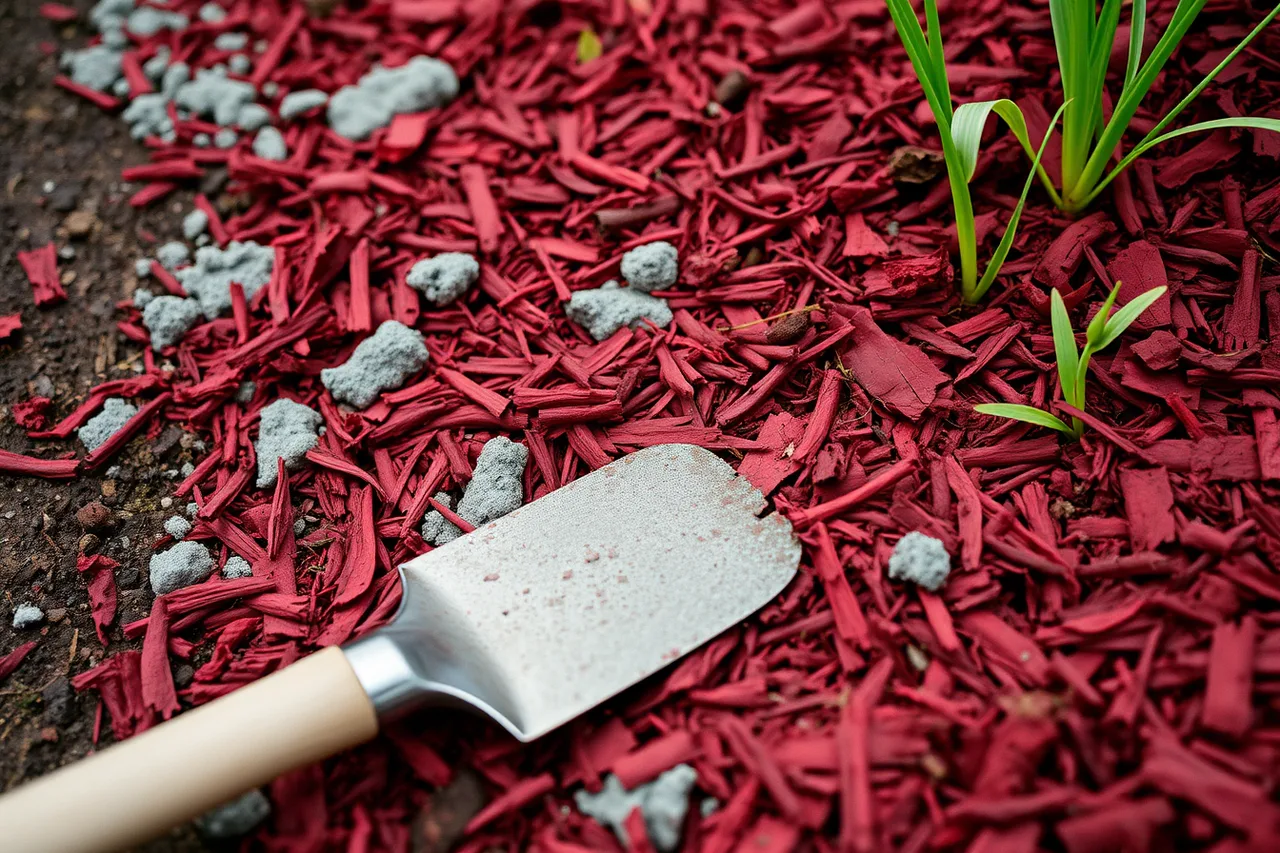
Dyed mulch deserves its own warning. Its color fades unevenly within a season. The fine grind mats into a crust that sheds water instead of letting it through, and the surface grows a mold layer in humid weather.
A coarse local wood chip costs less, holds on slopes better, and breaks down into something the soil can use.
Keep purchases inside the written project plan and check them against the basic site-first method before ordering.
Common questions
Are moisture meters worth it?
Sometimes, in large or hard-to-reach beds. The Sonkir is fine for a rough read; the Blumat Digital is worth the money if you grow in containers. Verify either against a trowel before trusting it.
Which mulch is best?
The one available locally in a shredded form that stays put on your slope. Arborist chips from a local tree service are usually free and outperform dyed bagged mulch. Depth matters more than type.
Do smart controllers save water?
Only when set up with local weather data and checked against actual meter readings. Rachio and Hunter both log usage; read the log monthly. If the number does not fall, the device is a convenience purchase.
Is weed fabric ever useful?
Under gravel paths and driveways, yes. Under planting beds, no. It blocks self-seeding, which is how a native bed fills in without more purchases.