Features
Part of Native landscaping bids: the eight buckets an estimate must cover
Charting native landscaping costs ideas: false savings
How to convert a small area for very little: sheet mulching over turf, plugs and seed, plant swaps, and the savings that turn out to be false.
What to take away
Native landscaping costs ideas that hold up rarely start on a sale rack.
- Cardboard and tree-crew wood chips over turf skip sod cutting and hauling, typically a $200 to $500 line on a 500-square-foot conversion.
- Plugs beat one-gallon potsroughly $2.50 to $5 a plug against $9 to $18 for a one-gallon native perennial at retail.
- The false savings are weed fabric, bargain mulch and skipping the first two seasons of watering.
- Regional seed mixes run about $25 to $60 a pound, the cheapest cover for a grass and forb matrix.
- Community plant banks, native plant society sales and swaps are a real supply channel, not a novelty: prices sit below retail, sometimes at zero.
Sheet mulching beats paying for removal
Sod cutting and hauling is often the largest line in a small conversion. Most of that cost is disposal weight. A walk-behind sod cutter rents for roughly $60 to $90 a day at home improvement stores, and yard waste tipping fees run $40 to $90 a load in most markets. Covering turf with cardboard and mulch avoids both charges.
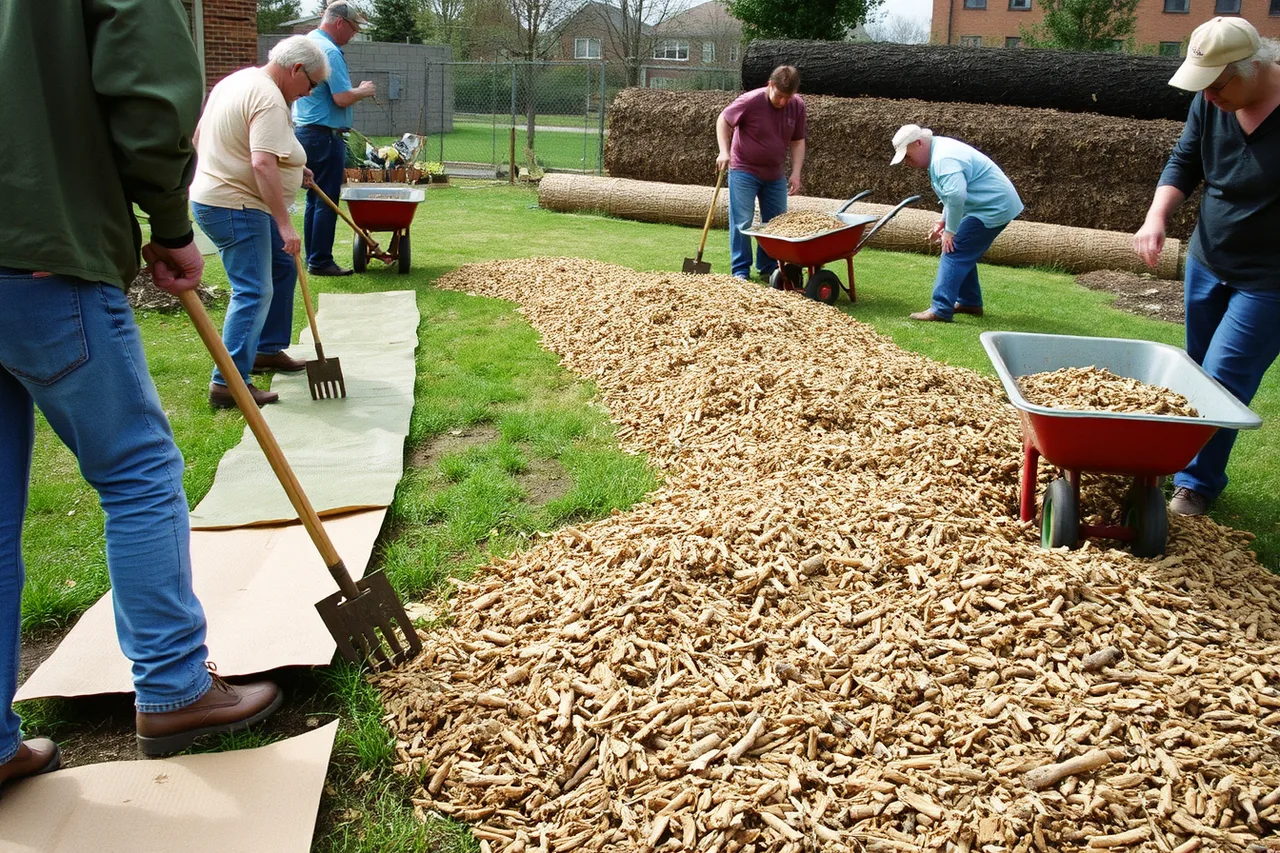
The sequence is simple enough to copy in a yard. A Fish and Wildlife Service account of a 6,000 square foot pollinator garden built in an Asheville housing community describes it.
Volunteers cleared the turf, laid cardboard, then coarse mulch, and rolled up the removed turf for reuse elsewhere.
Over multiple planting days, residents and volunteers put more than 500 plants in the ground, most from a local pollinator plant bank.
Two lessons for a small yard: the removed turf has value somewhere, and the plants can come from a shared source rather than a retail shelf.
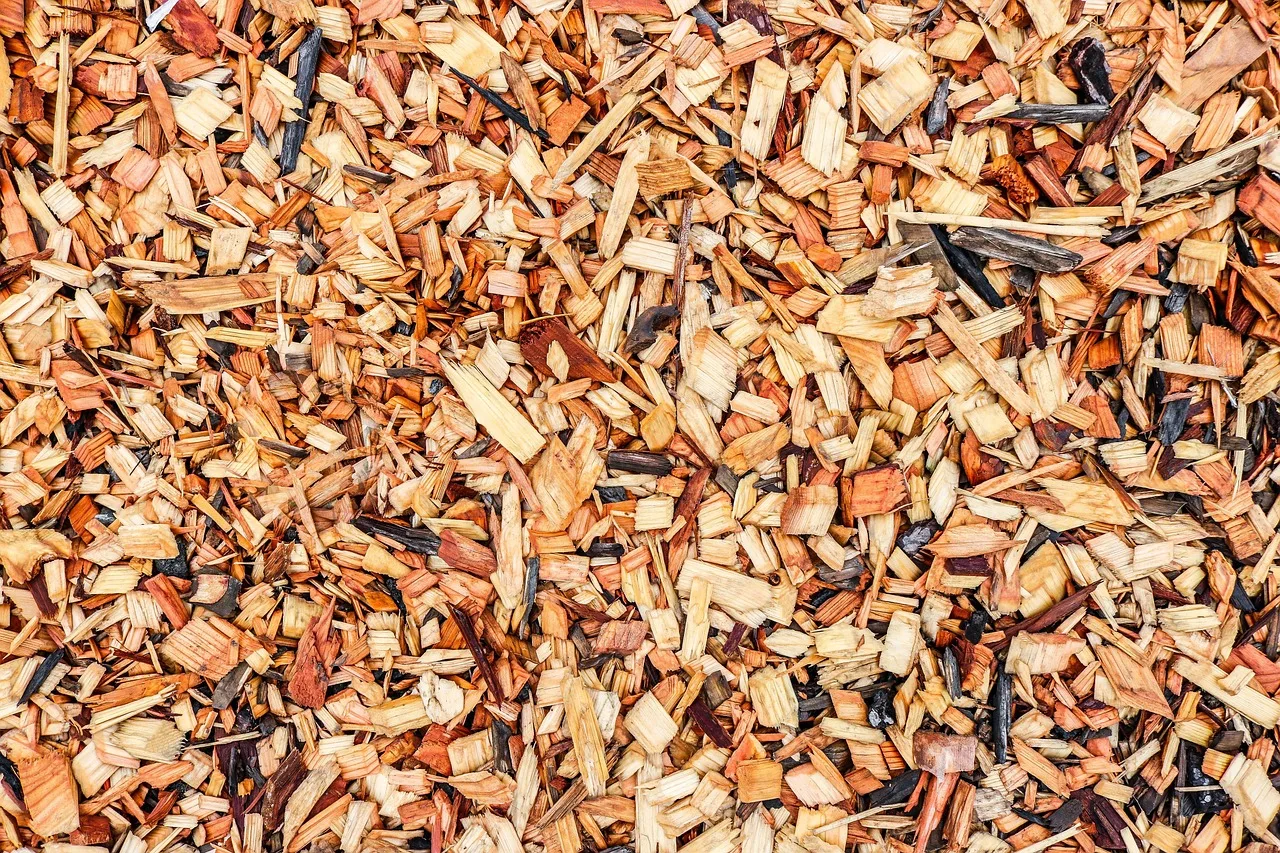
Cardboard is free from appliance and bike shops, and arborist chips often arrive free through ChipDrop, which matches residents with local tree crews. Bagged hardwood mulch costs $3 to $5 for a 2-cubic-foot bag. Bulk mulch runs $30 to $45 a cubic yard plus delivery.
Buy small, buy early, buy fewer species
| Choice | Rough effect on the plant line |
|---|---|
| Plugs instead of one-gallon stock | Large reduction per plant: plugs about $2.50 to $5 each, one-gallon natives $9 to $18 |
| Three species instead of ten | Fewer minimum-order penalties, since many growers ship plugs only in trays of 32 to 50 |
| Ordering months ahead | Access to straight species at plug prices, before spring sellouts |
| Seed for the matrix layer | Cheapest ground cover by far, slowest to establish: $25 to $60 a pound for regional mixes |
Seed is the low-cost route where you can wait. Federal programs rest on the same premise: the Bureau of Land Management's Seeds of Success has run since 2001 as the national native seed collection program, gathering wildland native seed for research, germplasm conservation and restoration.
Buy small, buy early, buy fewer
Choice
- Plugs vs one-gallon
- Large reduction per plant
- Three species vs ten
- Fewer minimum-order penalties
- Ordering months ahead
- Straight species at plug prices
- Seed for matrix layer
- Cheapest cover, slowest
Effect on plant line
- Plugs vs one-gallon
- Three species vs ten
- Ordering months ahead
- Seed for matrix layer
Mail-order growers publish prices by species and tray size. Prairie Moon Nursery in Winona, Minnesota, sells plugs and seed. Izel Native Plants ships trays from regional growers. A 200-square-foot bed often takes one tray of 32 to 50 plugs.
Seed is how large areas get planted affordably, and a small yard can borrow the logic for its grass and forb matrix. Buy it on a species list with percentages, a test date and an origin rather than on the picture.
Use the free supply channels
- native plant society sales, usually once or twice a year at below retail, often $3 to $6 a plant;
- extension and conservation district seedling sales, bare root in spring, typically $1 to $3 a seedling in bundles of 25;
- plant swaps, where divisions of established perennials cost nothing;
- volunteering at a restoration planting, where surplus stock sometimes goes home;
- your own divisions, once year three arrives and clumps need splitting.
Confirm identity at every one of these. A free plant with the wrong name costs more than a bought plant with the right one. You will not find out until it is three feet wide in the wrong place.
Ask the person handing it over for the scientific name and where the parent plant grows. Write both on a label before you leave.
Your own divisions are the exception; they come due when a clump thins in the middle or crowds its neighbor.
False savings
Weed fabric under a planting bed saves nothing. A 3-by-50-foot roll costs $30 to $50, and the fabric blocks self-seeding as it degrades into shreds.
Weeds still root in the mulch above it. Bargain mulch that is finely ground mats and sheds water, so it needs replacing sooner than coarse chips do.
Skipping the first two seasons of watering does not save money. A replacement plug costs $2.50 to $5 plus shipping, and hand watering a 100-square-foot bed for a season typically adds $20 to $50 to a water bill.
Sequence for a very small budget
Do the removal yourself in fall with cardboard and free wood chips. Order plugs over winter. Plant in the regional window. Water through the first summer. Divide and expand in year three using your own plants.
A 200-square-foot bed, priced with the typical ranges above: free removal, one tray of plugs at $80 to $250, $30 to $60 of regional seed, free chips, $20 to $50 of water. Total roughly $130 to $360. Hiring the same job runs $900 to $1,500 in most markets.
Apply the same thinking to layout with the small-space design options, and check the totals against the full cost breakdown.