Features
Part of Native landscaping: observe your yard before planting
Native landscaping ideas for small spaces: where to start
Native landscaping ideas for tight spaces: real bed size, balcony containers, layered small beds, clean edges, and mulch that holds up in a narrow strip.
These native landscaping ideas are for tight ground: a balcony, a narrow side yard, or a single bed. Almost every choice below comes back to the space you actually have, so measure first and plant second.
What to take away
- A small planting fails on mature size more often than on species choice.
- Containers dry out much faster than ground beds and change the watering job entirely.
- Vertical space is usually the cheapest space you have.
- One well-kept bed reads as intentional. Four half-finished ones do not.
Measure the volume, not the footprint
A three-foot-wide side yard is not a three-foot planting. Subtract the eave overhang, the meter clearance, the path you need to roll a trash can through, and the space the neighbor's fence takes when it leans. What is left is the real bed.
Nursery pot vs mature width
Nursery pot
- Shrub width
- 18 inches
- Fits tight bed?
- Looks like yes
- Four-year outcome
- Planted
Mature size
- Shrub width
- 6 feet
- Fits tight bed?
- No
- Four-year outcome
- Pruned stump or removed
Then check mature width, not nursery-pot width. A shrub sold at 18 inches across that matures at six feet will either be pruned into a stump or removed within four years. In tight ground, pick plants whose listed mature size already fits, and accept a smaller species instead of planning to control a larger one. Compact natives such as New Jersey tea (Ceanothus americanus) suit a narrow strip far better than a big shrub, and your state's native plant society or the USDA PLANTS database lists the compact species that are native where you live.
Balconies and patios: containers change the rules
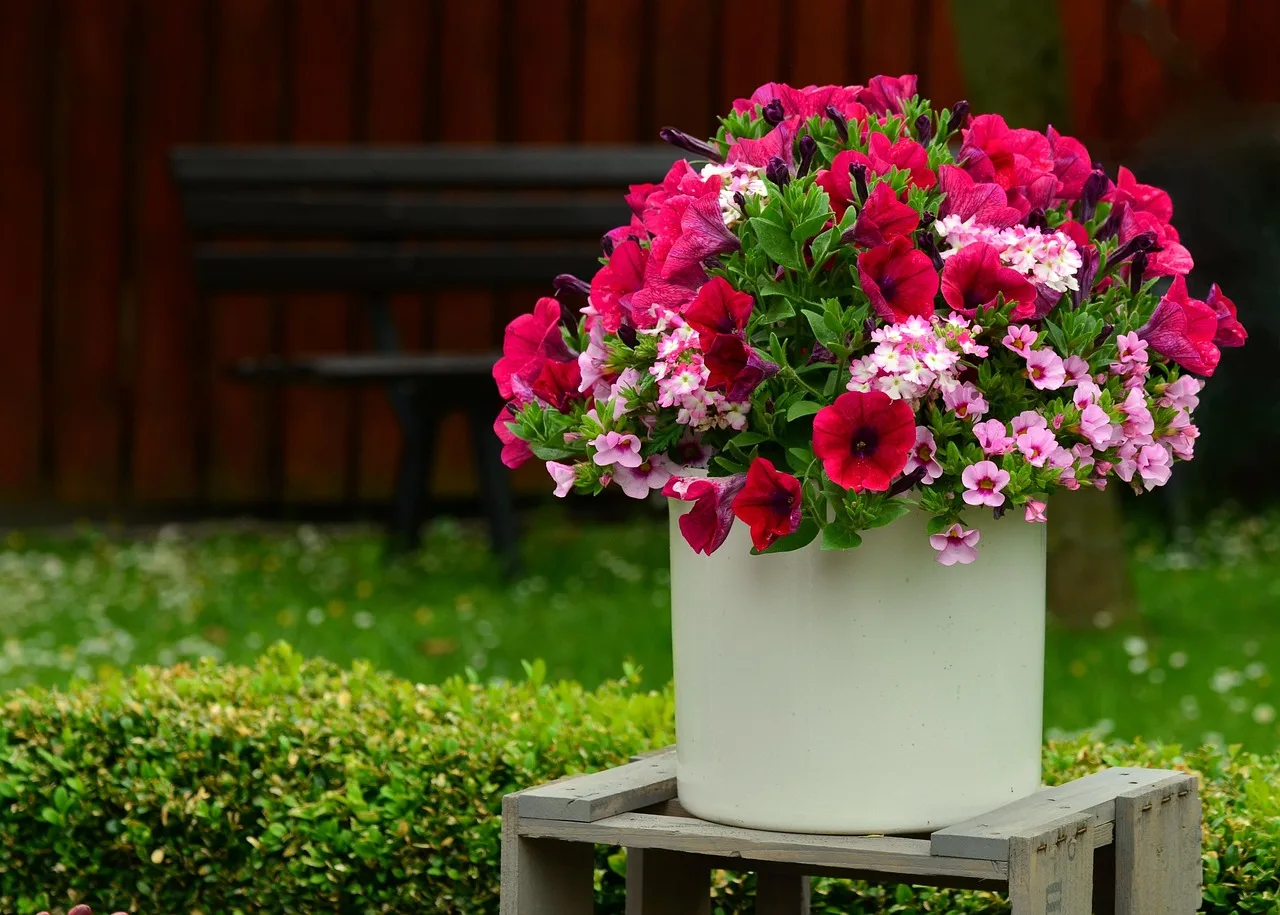
Container planting is a real option. The Fish and Wildlife Service's step-by-step balcony pollinator garden makes two points: pick plants before pots so the planter fits the plant, and pots dry faster than backyard soil.
It suggests training vines on railings or a trellis and wall planters. A four-foot balcony can then hold more than four feet of planting.
Native plants make that vertical space count. Coral honeysuckle (Lonicera sempervirens) in the Southeast and Virginia creeper (Parthenocissus quinquefolia) in the East and Midwest will climb a railing or a trellis, so the planting rises instead of spreading.
Practical container rules:
- bigger pots swing less in temperature and dry more slowly;
- group pots together so they shade each other's sides;
- overwinter hardy perennials in the largest containers you have, or sink them in the ground;
- use a potting mix rather than garden soil, which compacts in a pot;
- expect to water containers in summer when a ground bed would not need it.
Which natives earn a pot? For a sunny balcony, butterfly weed (Asclepias tuberosa), purple coneflower (Echinacea purpurea) and little bluestem (Schizachyrium scoparium) all take full sun and dry spells. For a balcony that only gets morning sun, wild columbine (Aquilegia canadensis) is the better fit. All four are herbaceous, so they go dormant and come back instead of leaving you an empty pot.
Small beds still need a plant community
A single bed can hold a structure plant, a repeating mid-layer and a ground layer. That is enough to look composed and to keep bare soil covered, which is what actually reduces weeding. Ground cover is the role that saves the most hours in any size of yard.
In sun, creeping phlox (Phlox subulata) and prairie dropseed (Sporobolus heterolepis) knit the ground layer, with purple coneflower (Echinacea purpurea) and black-eyed Susan (Rudbeckia hirta) repeating through the middle. In shade, Pennsylvania sedge (Carex pensylvanica), wild ginger (Asarum canadense) and Christmas fern (Polystichum acrostichoides) cover the ground under a shade shrub such as oakleaf hydrangea (Hydrangea quercifolia).
Public gardens do this at a scale you can copy, and the U.S. Botanic Garden's three-acre outdoor gardens draw on Mid-Atlantic environments.
The Garden notes native plants in its Regional Garden give birds food and shelter as urban habitat recedes.
The lesson is not acreage: a defined region plus layered planting creates habitat in a small area. Which species depends on where you live. Purple coneflower and little bluestem fit Midwestern and Plains beds, coral honeysuckle and oakleaf hydrangea fit the Southeast, and wild columbine, Christmas fern and Virginia creeper fit Eastern woodlands. Your county cooperative extension office or state native plant society keeps the current list for your area.
Edges do the work in a tight yard
In a small front yard, the edge is most of what a passerby sees. A steel or stone border, a mown strip, or a simple gravel band separates a planting from a mess at almost no cost. Keep at least one clean line facing the street.
Keep the palette short too. Three to five species repeated reads better in 60 square feet than twelve species used once each, and it makes weeding obvious: anything that is not one of your five is a weed.
Mulch is part of the edge, not decoration. Consistent depth across the bed makes irregular planting look deliberate. It keeps soil temperature steadier in a narrow strip that bakes against paving and buys time between weeding.
Depth matters more than the type you buy; mulch worth testing is really a question of depth. Pull it back from stems and trunks so bark stays dry.
Where to start
Pick the smallest area that solves a real problem, such as the hot strip beside the driveway or the bed under the front window. Then run the same sequence: watch the spot across a full day to count its sun hours, check where water stands after a storm, measure the plantable width left after paths and clearances, choose three to five natives of your region whose mature size fits, and buy them in the season your cooperative extension office recommends for planting. Follow the site-first planning sequence, then use a realistic project timeline so ordering and planting land in the right season.