Features
Part of Building a plan for native yard makeovers case studies: choosing your model
Small-space native makeovers built to finish in a single weekend
Small-space native makeovers that: entry beds, narrow side yards, patios and compact front yards, five small makeovers that finish in a weekend and still change how.
What to take away
- A small makeover with a clear theme beats a large one with none.
- Put the planting where people already stand, sit or walk.
- Small spaces reward evening interest, scent and structure over mass color.
- Habitat features cost almost nothing and change what visits the yard.
The five that work
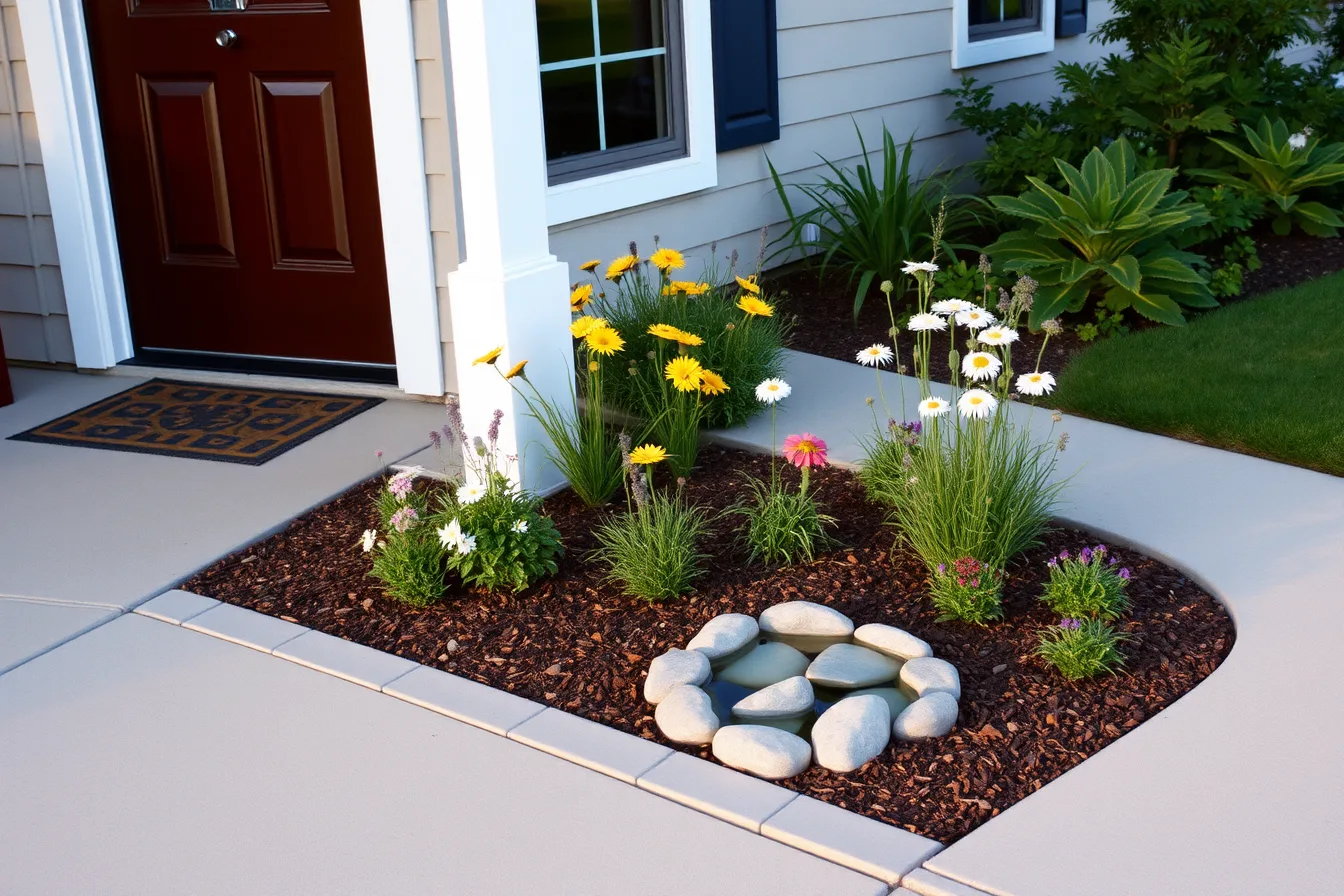
- The entry bedthe eight feet either side of the front door, replanted with a repeating group of three species and a clean edge.
- The narrow side yarda gravel path with a single sedge or fern along one side, and one columnar shrub at the far end.
- The patio edgea low planted band between paving and lawn, with a container or two for height.
- The hell striplow, tough, drought-adapted plants inside the city's height limit.
- The downspout cornera shallow planted basin taking roof water, planted with species that tolerate wet and dry.
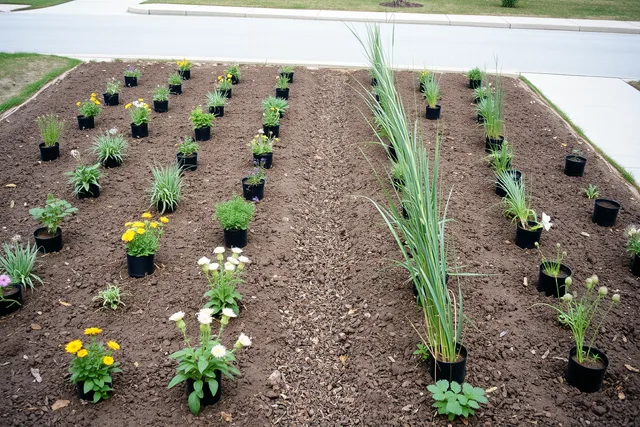
The entry bed. Typical mature widths: purple coneflower (Echinacea purpurea) 18 to 24 inches, threadleaf coreopsis (Coreopsis verticillata) 18 to 24 inches, prairie dropseed (Sporobolus heterolepis) 18 to 24 inches. Saturday: edge the bed and plant. Sunday: mulch and water.
Entry bed quantities. The bed is about 24 square feet. At 18 inches apart, 12 to 15 plants fill it. Native plugs typically run $3 to $6 each and quart pots $8 to $15, so plants cost a typical $60 to $200. Mulch and edging add $30 to $60.
The narrow side yard. Typical mature widths: Pennsylvania sedge (Carex pensylvanica) 6 to 12 inches, Christmas fern (Polystichum acrostichoides) 18 to 24 inches, inkberry (Ilex glabra) clipped to 3 feet. Saturday: gravel and planting. Sunday: mulch and water.
The patio edge. Typical mature widths: wild petunia (Ruellia humilis) 12 to 18 inches, butterfly milkweed (Asclepias tuberosa) 18 to 24 inches, little bluestem (Schizachyrium scoparium) 18 to 24 inches. Saturday: cut the edge and plant. Sunday: mulch and water.
The hell strip. Typical mature widths: butterfly milkweed (Asclepias tuberosa) 18 to 24 inches, purple poppy mallow (Callirhoe involucrata) 2 to 3 feet spread at under 12 inches tall, prairie dropseed (Sporobolus heterolepis) 18 to 24 inches. Saturday: check the height limit and clear. Sunday: gravel mulch and water.
The downspout corner. Typical mature widths: swamp milkweed (Asclepias incarnata) 2 to 3 feet, blue flag iris (Iris versicolor) 2 to 3 feet, switchgrass (Panicum virgatum) 2 to 3 feet. Saturday: dig the basin and plant. Sunday: mulch and water.
Each is finishable in a weekend, and each is small enough to water by hand through the first summer.
US planting windows follow local frost dates. A typical guide: plant after the last spring frost and stop about six weeks before the first fall frost, or plant in fall in zone 7 and warmer. Your state extension service lists county frost dates.
Pick the one that fixes something you notice daily. The entry bed changes what you first see coming home. The side yard turns a dead corridor into a route you do not resent walking.
The downspout corner stops water sitting against the foundation. A makeover chosen for a photograph rarely gets maintained; one chosen for a daily irritation usually does.
Do not attempt two of them in the same season on a first project. One finished small space teaches you the watering rhythm, the weeding load and the local planting window, and all three of those transfer to the next one. Run it as a trial and the weeding hours will tell you the size of phase two.
Design for the evening
Small spaces get the most use in the evening, so plant for then. The Fish and Wildlife Service's guide to creating a moon garden for night pollinators says a moon garden need not be large and belongs where people gather.
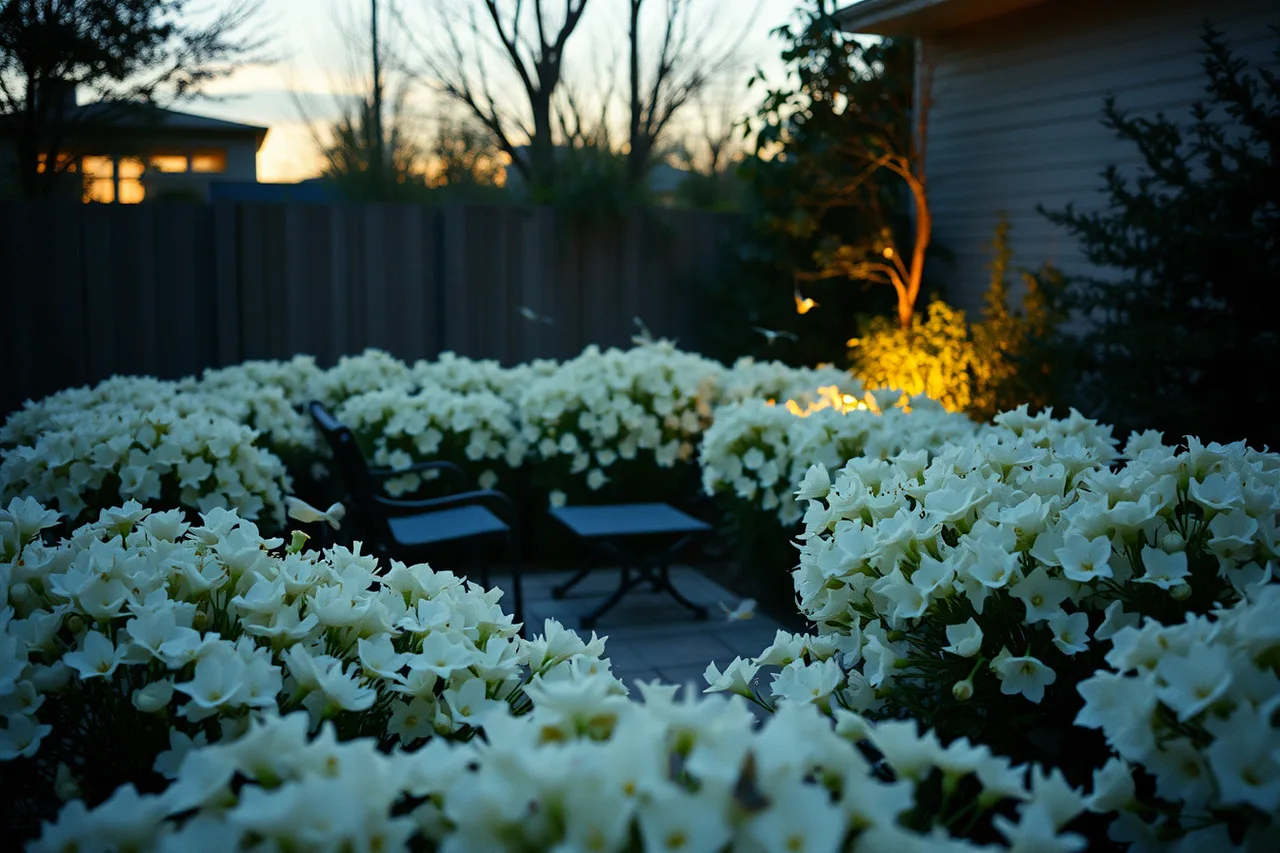
Pale, heavily fragrant night-blooming flowers attract moths and nectar-feeding bats.
Grouping flowers of the same shade of white reads better than mixing whites and creams together, which tends to make the subtler blossoms look dull rather than luminous.
Add the habitat features while you are there
They cost almost nothing and they are the difference between a planting and a habitat:
Add the habitat features
- a shallow water dish with stones for insects to land on;
- a small brush pile or a log in an out-of-the-way corner;
- a patch of bare, undisturbed soil for ground-nesting bees, part of letting the insect layer come back;
- leaf litter left in the bed over winter;
- no blanket insecticide treatments.
Small mammals benefit from the same features.
The Fish and Wildlife Service points out in its guide to backyard mammals that as people move further into places animals once lived, mammals do better.
Keep the maintenance honest
A small makeover fails the same way a large one does: nobody waters it in July. Write down who does it, on what test, and for how long, and keep the area small enough that the answer is realistic.
Two pages carry the detail this article leaves out: the small-space design options for bed shapes and spacing, and the four makeover models for project scale.