Maintenance
The best water-saving yard products and how each was judged
The best water-saving yard products, ranked on measured flow, pressure tolerance and repairability, with the criteria used to judge each one.
What to take away
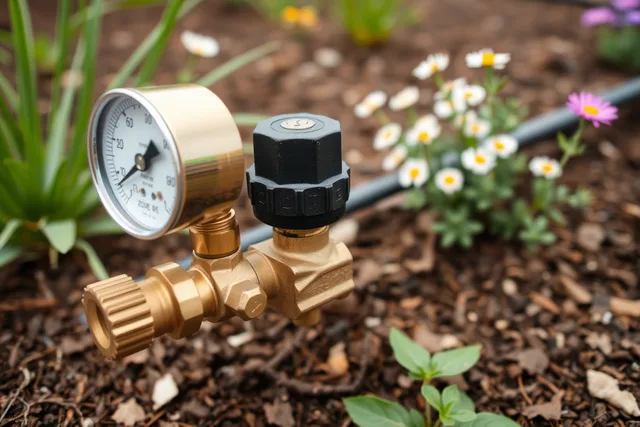
- Pressure regulation is the highest-return device on a residential system; most spray problems are pressure problems.
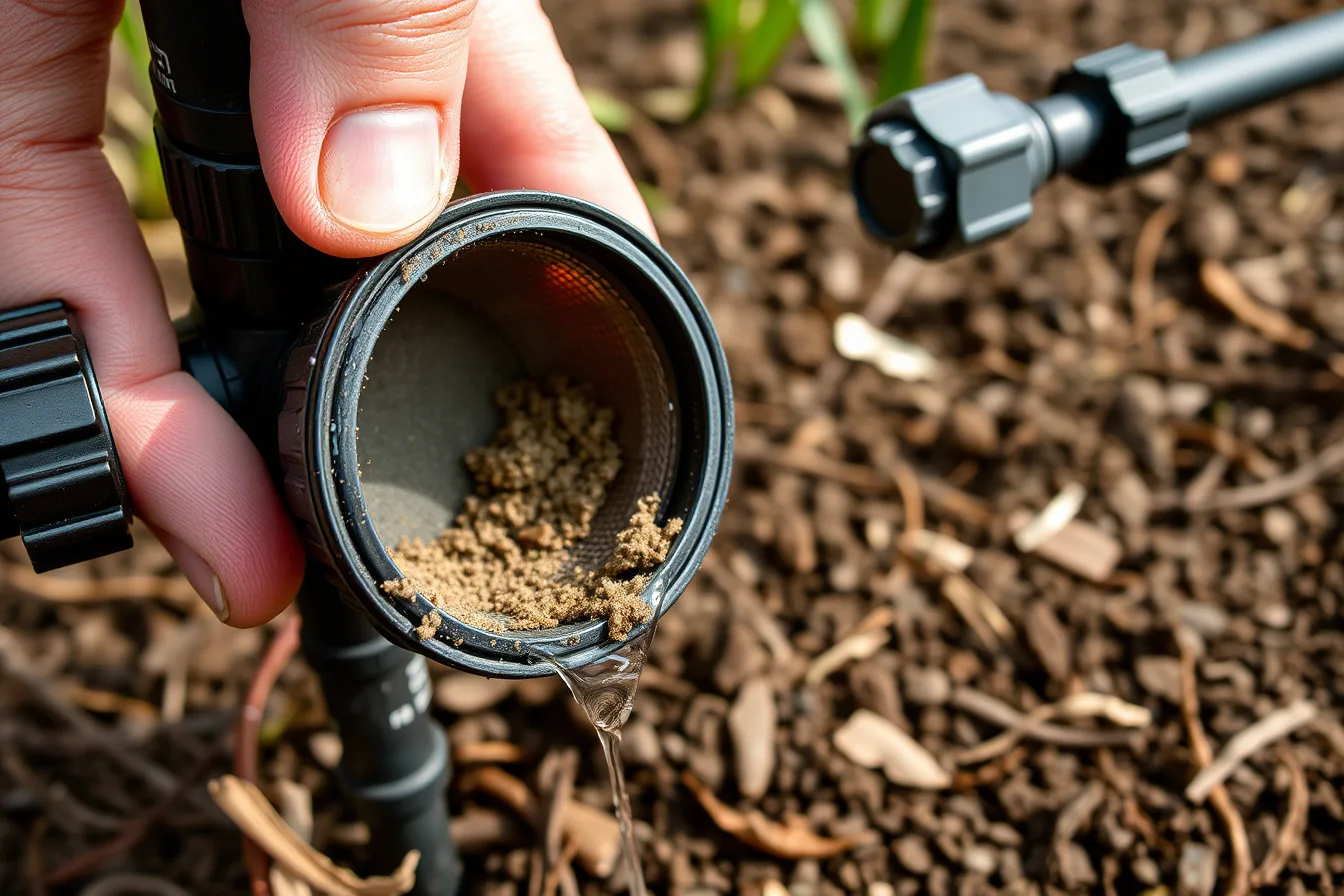
- A filter on every drip zone prevents the clogging that causes most emitter failures.
- Match the controller to the sitesoil type, slope, sun exposure and plant maturity.
- A sensor in an unrepresentative spot gives confidently wrong answers.
- Buy devices with replaceable parts, because emitters, diaphragms and seals fail first.
How these products were judged
Five criteria, applied in this order.
Five judging criteria in order
- Measured flow at real pressure
- Pressure tolerance at the spigot
- Repairability of diaphragms and seals
- Scheduling intelligence for weather and soil
- Verification with meter and trowel
- Measured flow at real pressure.Published flow rates assume ideal pressure. A device that only performs within a narrow band fails on most residential systems.
- Pressure tolerance.Can it run at the pressure actually at the spigot, not the pressure on the box?
- Repairability.Replaceable diaphragms, seals and emitters beat sealed units that must be discarded whole.
- Scheduling intelligence.Does the controller adjust for weather, soil and season, or just run a clock?
- Verification.Can a homeowner confirm the device is working with a meter and a trowel, without a contractor?
The ranked list
1. Pressure-regulating spray bodies (Rain Bird 1800 PRS, Hunter Pro-Spray PRS). These cap each head at its design pressure, which stops the misting and drift that waste water before it reaches the root zone. Fit them before buying any controller. Suits any system running above its heads' rated pressure.
Ranked products and what each suits
Product
- 1. PRS spray bodies
- Systems above rated pressure
- 2. Drip filter and regulator
- Every drip system
- 3. Smart controllers
- App users, multi-site contractors
- 4. Soil moisture sensors
- Rain-skip watering
- 5. PC drip tubing
- Slopes, long runs, mixed plant
Suits
- 1. PRS spray bodies
- 2. Drip filter and regulator
- 3. Smart controllers
- 4. Soil moisture sensors
- 5. PC drip tubing
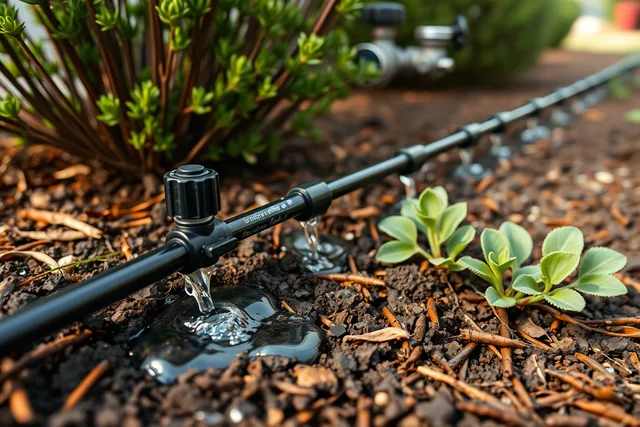
2. Drip zone filter and pressure regulator kit (Netafim, Rain Bird). Sediment and mineral deposits clog emitters; excess pressure blows them off. A filter and a regulator on every drip zone address both failure modes at once. Suits every drip system. Clean the filter monthly in summer.
3. Smart irrigation controllers (Rachio, Hunter Hydrawise, Rain Bird ESP-TM2). These adjust run times for weather, soil type and season instead of running a fixed clock. Rachio suits homeowners who want app control; Hydrawise suits contractors managing several sites. All three need correct zone setup to work.
4. Soil moisture sensors (Rain Bird, Toro). Buried at root depth in a representative spot, they stop the system watering after rain. Placed in the wettest corner or under an emitter, they do the opposite. Verify against a trowel before trusting one.
5. Pressure-compensating drip tubing (Netafim Techline, Rain Bird XFD). Emitters built into the tubing hold a constant rate across a long run and a slope, which fixed emitters cannot. Suits slopes, long runs and mixed planting beds.
6. Mulch and sheet-mulch supplies. Not a device, but the cheapest way to cut evaporation from bare soil. Three to four inches of coarse arborist chip or bark, kept off stems, does more than most hardware.
7. Rain shutoff sensors and rain barrels. A shutoff sensor is the cheapest way to stop a system watering during rain. A barrel suits hand watering of containers and small beds. Both are simple, and both fail if nobody checks them.
What each criterion rules out
A device can be well made and still wrong for your site. A controller with excellent weather data fails if the zone map is wrong. A pressure-compensating line fails if the filter is missing upstream.
Measure your zone application rate
- Turn off everything else
- Run one zone for ten minutes
- Read the water meter
- Build every schedule on that number
Before buying anything, get the application rate for each zone. Run one zone for ten minutes with everything else off and read the meter. That number is what any schedule should be built on, and it is why a paid audit beats a free quote.
Where the list does not apply
Some wet spots are subsoil, not system. A corner that stays saturated may sit over a compacted or slowly permeable layer invisible from the surface. USDA publishes soil color maps at various depths for that reason.
Dig and look. Gray or mottled subsoil where water sits means the drainage problem is not the emitter. That corner is a habitat to plant rather than a fault to drain.
Adoption follows local conditions rather than good intentions. USDA's Economic Research Service, discussing conservation program design and drought risk, notes that participation in voluntary programs reflects local conditions, including local drought risk. Household habits work the same way: the routines that survive fit the place and take minutes.
Check the ranked devices against the review framework and the setup steps in the equipment checklist.
Common questions
How do I find a hidden leak?
Meter test with everything off, then isolate zones one at a time. A leak shows as flow when no zone should be running.
Why does one zone dry out faster?
Different soil, slope, exposure or application rate. Measure the rate before adjusting the time.
Should I replace old spray heads?
Pressure-regulating heads are usually worth it, but fix the pressure first either way. A regulator at the valve can solve the whole system at once.
Can I fix false leak alerts?
Check the monitor's threshold and any small legitimate flow, such as a drip zone or a fountain. Most false alerts are a threshold set below normal drip flow.