Reviews
Part of Native Yard Projects Planning: A Process Overview
Which yard upgrades are worth it long term, ranked by daily effect
A ranking of yard upgrades for a home yard by daily effect and time to pay off, covering shade trees, turf removal, insect layers, rain gardens and paths.
What to take away
- Shade is the upgrade with the largest daily effect and the longest lead time.
- Replacing turf you never walk on removes a chore without removing use.
- A functioning insect population is pest control you do not have to buy.
- Reversible upgrades belong first. Anything with concrete belongs last.
Rank upgrades by what changes daily
Not every improvement earns its cost. A useful ranking asks how often you notice it.
Upgrades: daily effect vs payoff
Upgrade
- Shade tree, west side
- Cooler rooms, less glare
- Turf removal, unused areas
- Less mowing, less watering
- Layered bed over bare mulch
- Fewer weeds, more wildlife
- Downspout to planted basin
- Less water at foundation
- Defined paths and edges
- Yard usable, looks kept
- Boulders and statuary
- Looks only
Daily effect
- Shade tree, west side
- 5-15 years
- Turf removal, unused areas
- One season
- Layered bed over bare mulch
- Two seasons
- Downspout to planted basin
- Immediate
- Defined paths and edges
- Immediate
- Boulders and statuary
- Never
Time to pay off
- Shade tree, west side
- Turf removal, unused areas
- Layered bed over bare mulch
- Downspout to planted basin
- Defined paths and edges
- Boulders and statuary
| Upgrade | Daily effect | Time to pay off |
|---|---|---|
| Shade tree on the west side | Cooler rooms and patio, less afternoon glare | 5 to 15 years |
| Turf removal in unused areas | Less mowing, less watering | One season |
| Layered bed replacing bare mulch | Fewer weeds, more birds and insects | Two seasons |
| Downspout redirected to a planted basin | Less water against the foundation | Immediate |
| Defined paths and edges | The yard becomes usable and looks kept | Immediate |
| Decorative boulders and statuary | Looks | Never, functionally |
Shade first, because it takes longest
A tree planted on the west or southwest side does more for comfort than any other single change. It takes years, which is the argument for planting it now rather than later. Plant the slow roles first even though they pay last, because the clock starts when the plant goes in.
The effect is measurable at institutional scale. A Fish and Wildlife Service report on replacing asphalt schoolyards in Philadelphia describes four schools swapping pavement for shade trees, outdoor classrooms, pollinator gardens and rain gardens.
Over 250 trees were planted across the project, with at least 60 per school. The same reasoning applies to a house: temperature and tree cover affect how people function outdoors.
Pick a species with a mature height that clears your roof and your service lines, and plant it far enough from the foundation that you never have to choose between the tree and the slab.
Remove the turf nobody uses
Walk the yard and mark where feet actually go. The strip behind the garage, the slope by the driveway and the side yard usually see nothing but a mower.
That is the turf to convert first, because you lose no function. Keep the lawn where children play, where a path is genuinely needed, and where a code or covenant requires it. Everything else is a weekly chore you are performing for an audience of nobody.
Let the insect layer come back
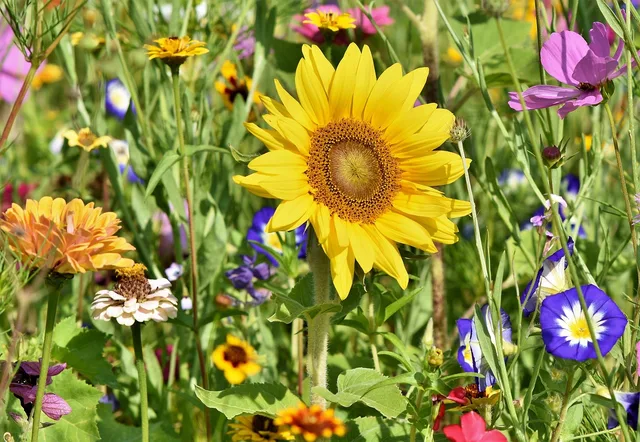
Insects are working parts of a yard, not a problem to solve. Keeping something in flower from early spring to frost feeds them, which is how a front-yard planting gets built season by season.
The Fish and Wildlife Service's summary of backyard insects and pollinators puts the jobs plainly. Pollinators produce food, worms keep soil healthy, spiders control pests, and their presence supports birds and bats.
Practical steps that get you there:
- plant several species that flower at different times, so something blooms from spring to frost;
- leave stems and leaf litter in beds over winter;
- keep a corner unmulched, since many native bees nest in bare ground;
- stop blanket insecticide treatments, which remove the pest control along with the pests.
Do the reversible things first
Beds, paths, mulch and plants can be changed. Concrete, walls and buried irrigation cannot, cheaply. Sequence accordingly, and re-read the project planning steps before committing to anything permanent. If your space is tight, the small-space options apply the same ranking at a smaller scale.